EN
EN
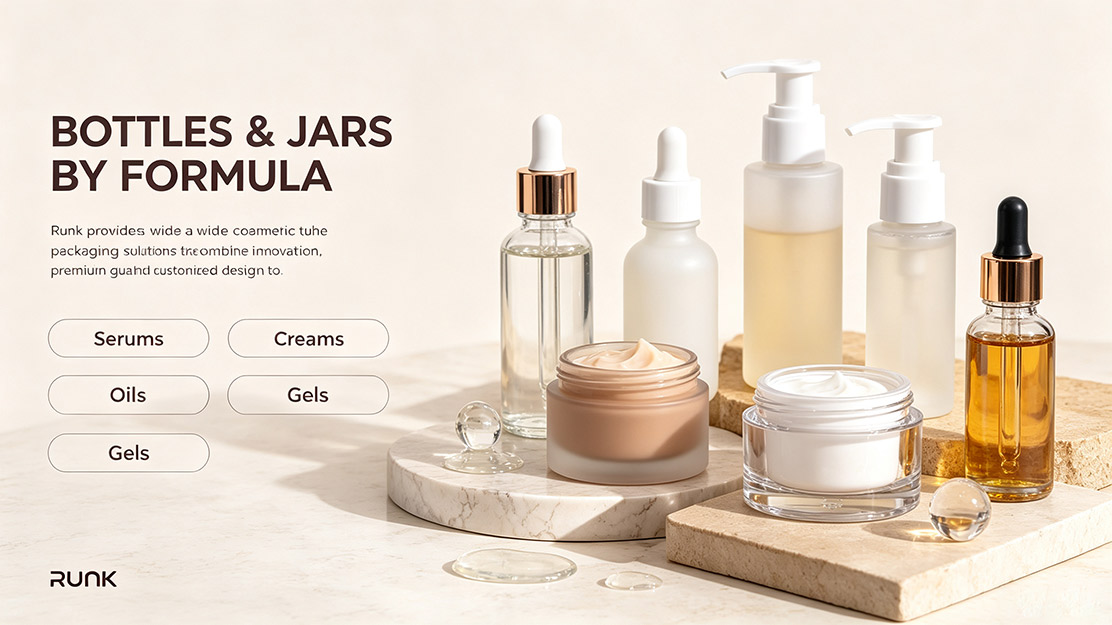
How To Select Cosmetic Bottles and Jars for Different Formulas and Products
Choosing the right cosmetic packaging is an important part of skincare product development. A beautiful bottle or jar may attract customers, but packaging also needs to protect the formula, provide a convenient user experience, support the brand image, and remain stable throughout transportation and storage.
Different cosmetic formulas have different packaging requirements. A lightweight serum may work well with a pump bottle, while a rich face cream may be better suited to a cosmetic jar. Sunscreen, toner, cleanser, body lotion, eye cream, and hair care products may each require different packaging structures and dispensing systems.
For cosmetic brands, selecting packaging based only on appearance can create problems later in production. The right approach is to consider the formula, viscosity, ingredients, dispensing method, product usage, packaging material, sustainability requirements, and target market together.
In this guide, we will explain how to select cosmetic bottles and jars for different formulas and products, and what brands should consider before placing a custom packaging order.
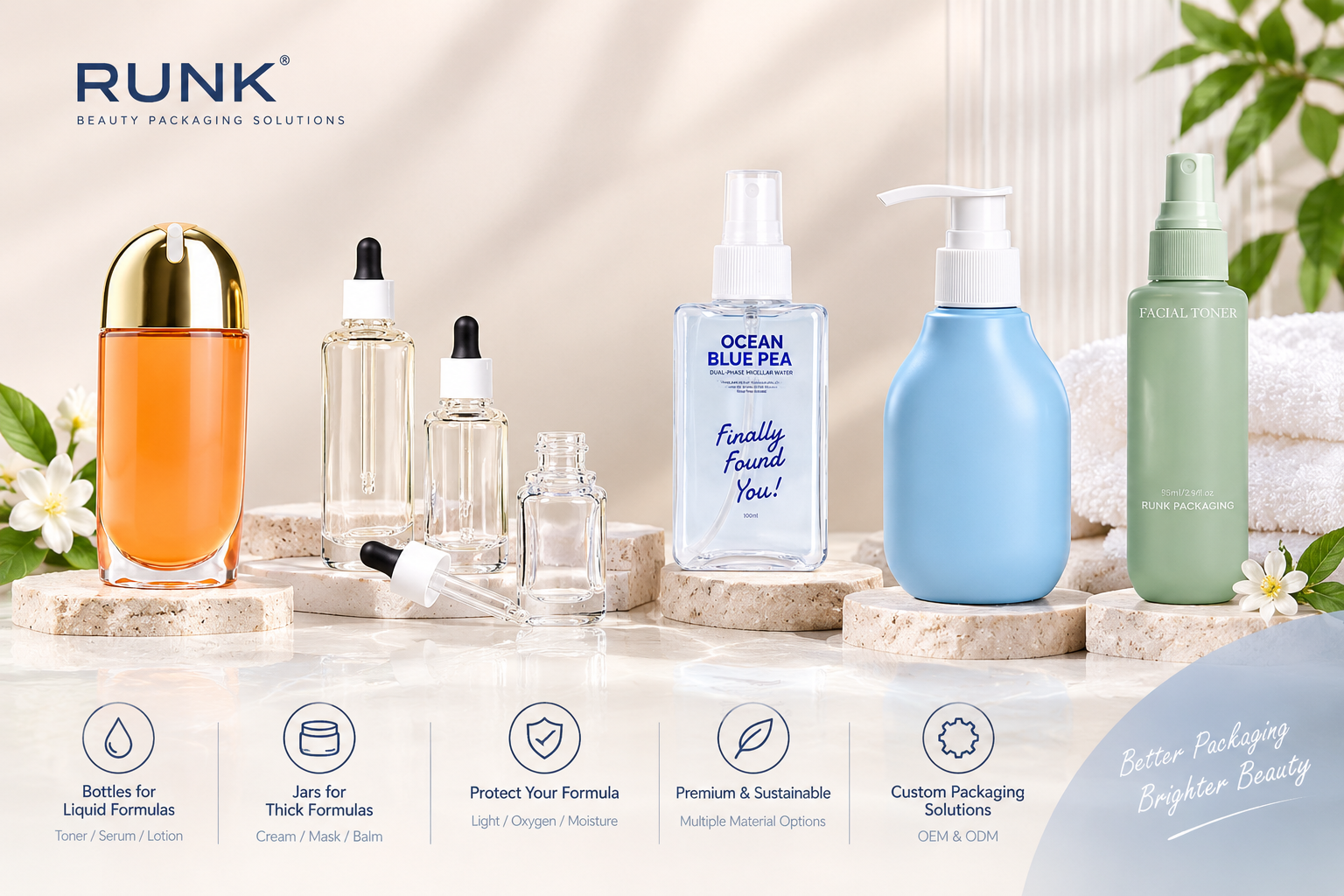
1. Start With the Formula
The first step in choosing cosmetic packaging is understanding the formula.
Before selecting a bottle or jar, consider:
Formula viscosity
Product ingredients
Sensitivity to oxygen
Sensitivity to light
Moisture sensitivity
Chemical compatibility
Dispensing requirements
Expected shelf life
Storage conditions
Filling process
A thin liquid formula behaves very differently from a rich cream or thick balm.
For example, a toner usually requires easy and controlled dispensing, while a facial cream needs a packaging structure that allows consumers to access a thicker formula easily.
The packaging should therefore be developed around the product rather than simply selecting a container from a catalog.
2. Choose Bottles for Liquid and Lightweight Formulas
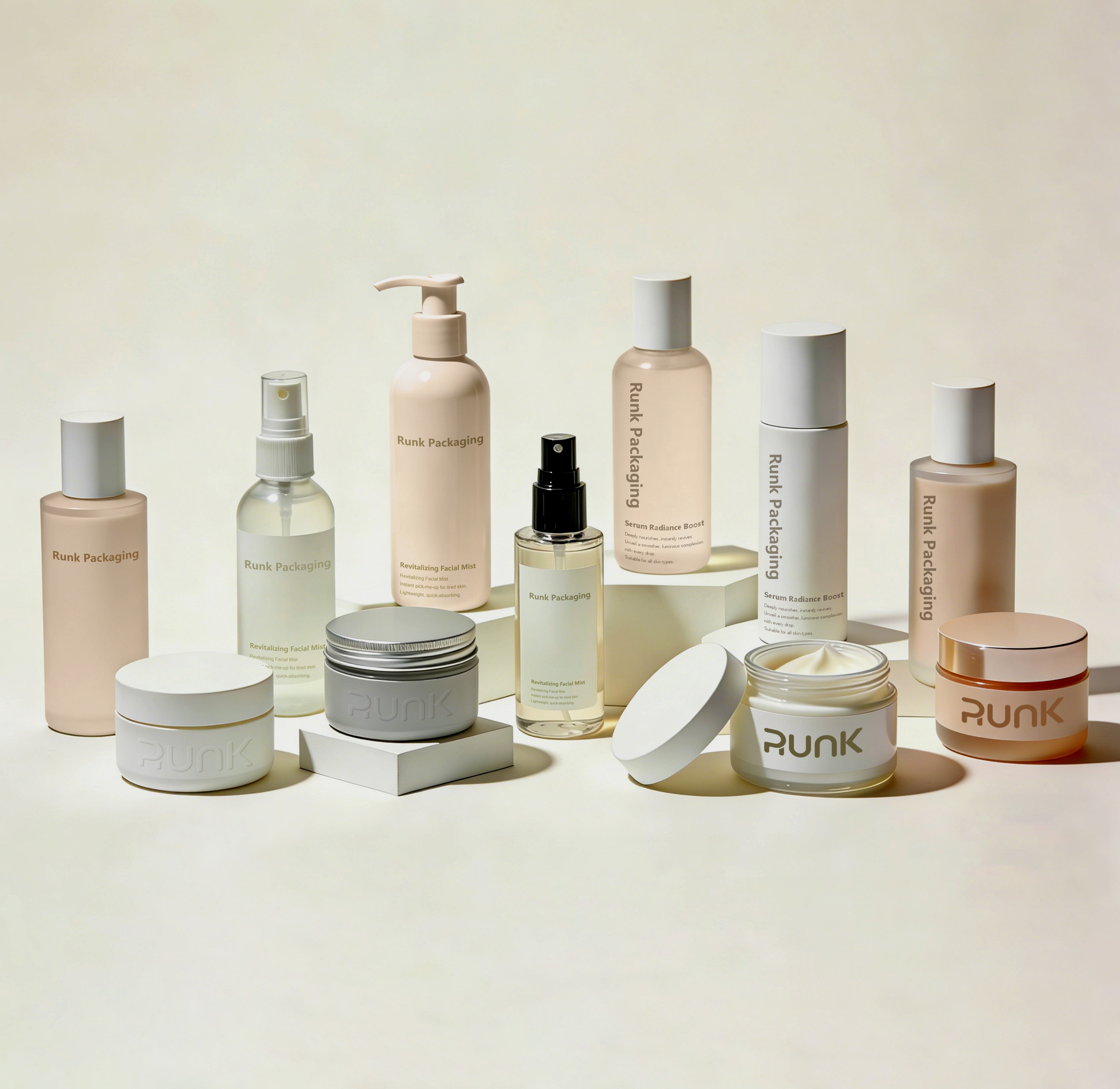
Cosmetic bottles are commonly used for products with liquid or relatively lightweight textures.
Typical applications include:
Toner
Essence
Serum
Facial mist
Body lotion
Shampoo
Conditioner
Cleansing products
Hair treatments
The dispensing system is particularly important for these products.
Depending on the formula, brands can consider:
Screw caps
Flip top caps
Press pumps
Lotion pumps
Spray pumps
Trigger pumps
Dropper systems
For a facial serum, a pump can provide controlled dispensing and help reduce direct contact between the formula and the user's hands.
For a toner, a simple screw cap or flip top closure may be sufficient.
For a facial mist, a fine spray pump can create a more suitable application experience.
The key is to match the dispensing system with the formula's viscosity and intended use.
3. Choose Cosmetic Jars for Creams and Thick Formulas
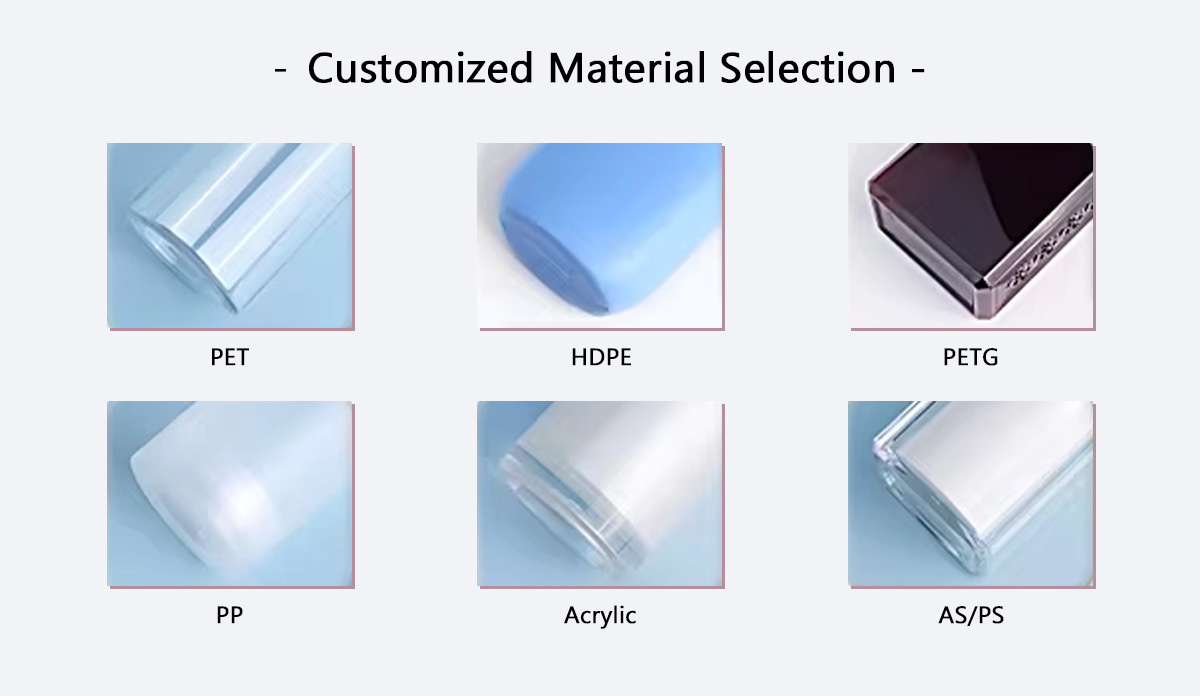
Cosmetic jars are often used for products with thicker textures.
Common applications include:
Face cream
Moisturizing cream
Eye cream
Night cream
Sleeping mask
Facial mask
Body butter
Hair mask
Thick balm
Jars provide a wide opening, making them convenient for consumers to access thick products.
They can also create a premium visual appearance and provide a large surface area for branding and decoration.
For luxury skincare products, thick wall cosmetic jars can create a substantial and high-end packaging experience.
However, brands should also consider how the formula will be used and whether direct contact with the product is appropriate.
For certain formulas, a pump or Airless packaging system may provide better product protection and a more hygienic dispensing experience.
4. When Should You Choose a Cosmetic Bottle?
A cosmetic bottle may be a good choice when the product is:
Liquid
Lightweight
Fluid
Easy to dispense through a pump or spray
Designed for frequent application
Examples
Toner
A toner is usually a low-viscosity liquid. A bottle with a suitable cap or dispensing system provides convenient daily use.
Serum
Serums can vary significantly in viscosity. A pump bottle, dropper bottle, or other precision dispensing system can be considered depending on the formula.
Body Lotion
Body lotion is often suitable for a larger bottle with a lotion pump because consumers may need to dispense a relatively large amount of product.
Shampoo and Conditioner
Bottle packaging with a pump, flip top, or other suitable closure can provide convenient dispensing in the shower or bathroom.
5. When Should You Choose a Cosmetic Jar?
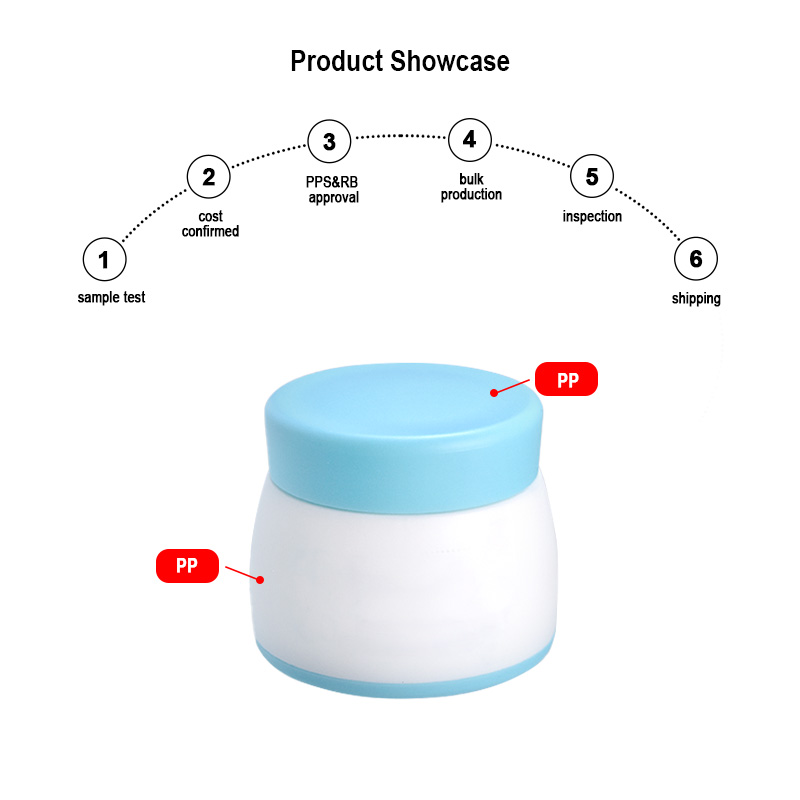
A jar may be more appropriate when the product is thick or designed to be scooped.
Typical applications include:
Face cream
Eye cream
Night cream
Body butter
Facial mask
Hair mask
Scrub
Balm
The wide opening makes it easier to access thick formulas.
Jars can also provide greater flexibility for premium packaging design, especially when brands want to create a substantial and luxurious appearance.
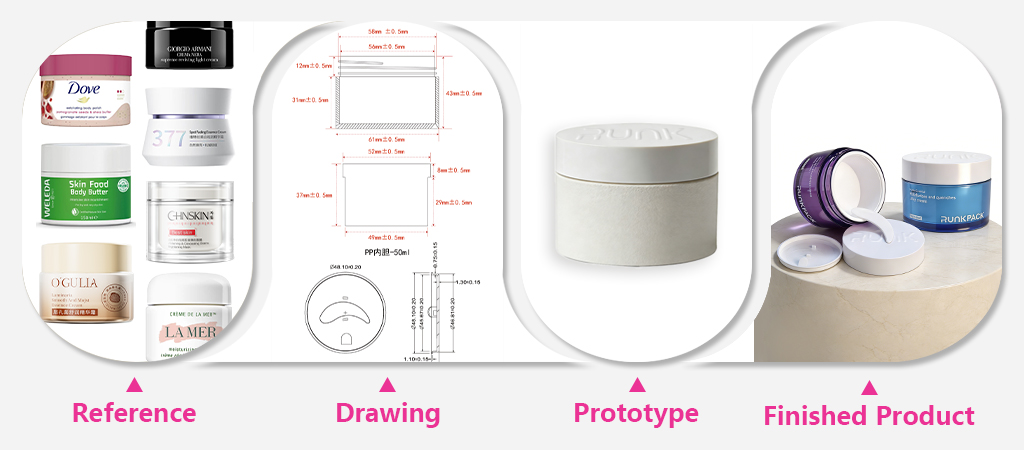
Runk offers customized cosmetic jars in different materials, sizes, shapes, colors, and closure configurations for skincare and beauty products.
6. Consider the Packaging Material
Material selection is another important part of cosmetic packaging development.
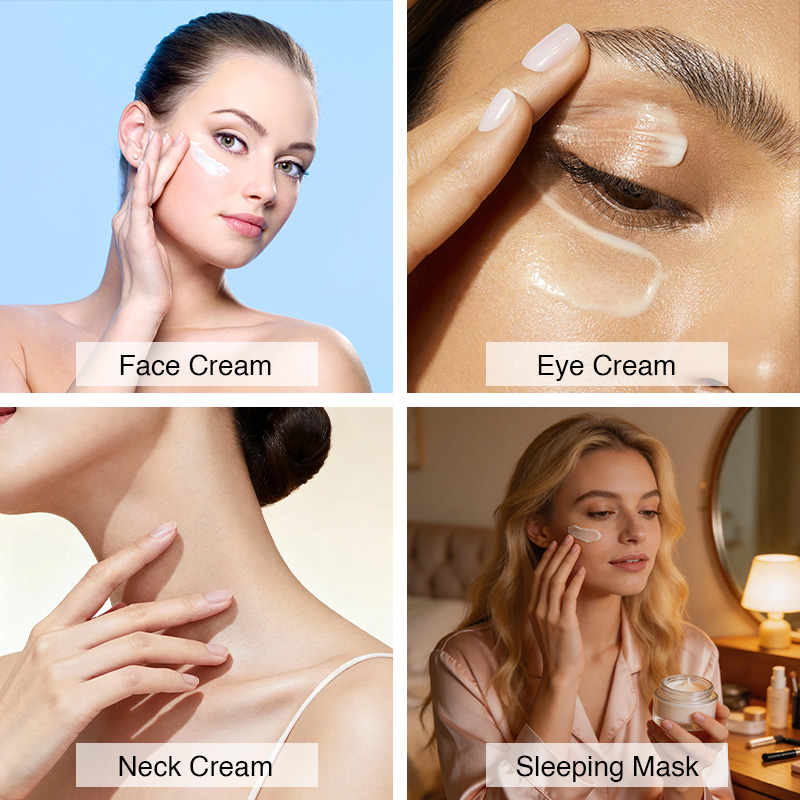
Common cosmetic packaging materials include:
PET
PET is lightweight, durable, and widely used for cosmetic bottles and jars.
It can provide a clear, glossy, or customized appearance and is suitable for many skincare and personal care applications.
PP
PP is commonly used for cosmetic jars, bottles, caps, and other packaging components.
It offers good chemical resistance and can be produced in different colors and structures.
HDPE
HDPE provides good durability and chemical resistance and is commonly used for personal care and cosmetic packaging.
Glass
Glass packaging can provide a premium and substantial appearance and is often associated with luxury skincare products.
However, brands should consider its weight, transportation requirements, breakage risk, and overall logistics cost.
7. Match the Packaging With Formula Viscosity
Viscosity is one of the most practical factors in packaging selection.
A simple way to think about it is:
Low Viscosity
Examples include:
Toner
Facial water
Essence
Lightweight serum
Facial mist
Potential packaging options include bottles with spray pumps, pumps, screw caps, or other liquid dispensing systems.
Medium Viscosity
Examples include:
Emulsion
Lotion
Body lotion
Lightweight moisturizer
Hair conditioner
Pump bottles and squeeze bottles can provide convenient dispensing.
High Viscosity
Examples include:
Face cream
Eye cream
Body butter
Hair mask
Thick balm
Jars, squeeze tubes, and suitable pump systems may be considered.
The final packaging choice should always be confirmed through actual product testing because formulas with similar viscosity can still behave differently depending on their ingredients.
8. Consider Formula Protection
Packaging is not only about dispensing the product. It also needs to help protect the formula.
Some formulas may be sensitive to:
Oxygen
Light
Moisture
Temperature
External contamination
In these cases, brands may need to consider packaging structures that provide additional protection.
For example, certain sensitive skincare formulas may benefit from Airless packaging because the dispensing system is designed to reduce direct exposure of the remaining product to air.
Opaque or colored packaging can also be considered when the formula is sensitive to light.
For formulas with specific protection requirements, packaging compatibility and stability testing should be performed before mass production.
9. Consider the User Experience
Consumers interact with cosmetic packaging every day, so the packaging should feel intuitive and comfortable.
Ask yourself:
Is it easy to open?
Is the right amount of product dispensed?
Can the consumer use almost all of the product?
Is it comfortable to hold?
Does it work well during travel?
Does the closure prevent leakage?
Does the packaging match the way the product is normally used?
For example, a 200ml body lotion may be easier to use with a pump bottle than a small jar.
An eye cream may benefit from a smaller container and controlled dispensing.
A luxury face cream may use a thick wall jar to create a premium unboxing experience.
Good packaging should make the product easier and more enjoyable to use.
10. Think About Capacity and Product Positioning
Capacity should match both the product's recommended usage and your market positioning.
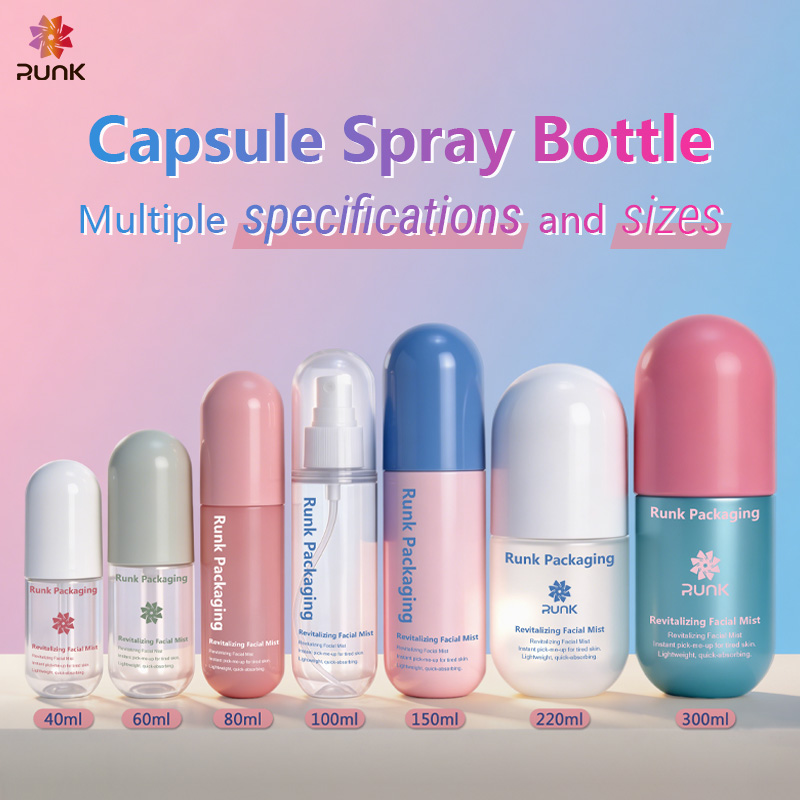
Common cosmetic packaging capacities include:
10ml
15ml
20ml
30ml
50ml
100ml
120ml
150ml
200ml
250ml
300ml
500ml
Smaller capacities can be suitable for eye creams, serums, travel products, and premium treatments.
50ml jars are commonly associated with facial creams and moisturizers.
100ml and larger packaging formats can be suitable for body care, hair care, and family size products.
The final capacity should also take into account filling volume, headspace, product density, and filling equipment.
11. Choose Packaging Based on Your Brand Positioning
Packaging is one of the first things customers see.
A cosmetic package can communicate whether a brand is:
Premium
Minimalist
Natural
Clinical
Professional
Youthful
Sustainable
Luxury
For example, a minimalist skincare brand may prefer clean shapes, neutral colors, and simple decoration.
A luxury skincare brand may choose thick wall jars, metallic finishes, hot stamping, or premium surface treatments.
A natural beauty brand may consider soft colors and sustainable material options.
A professional skincare brand may prefer functional packaging with clear product information.
The packaging should be consistent with the entire brand identity rather than being designed as an isolated product.
12. Consider Sustainability
Sustainability is becoming an increasingly important consideration in cosmetic packaging development.
Depending on the product and target market, brands may explore:
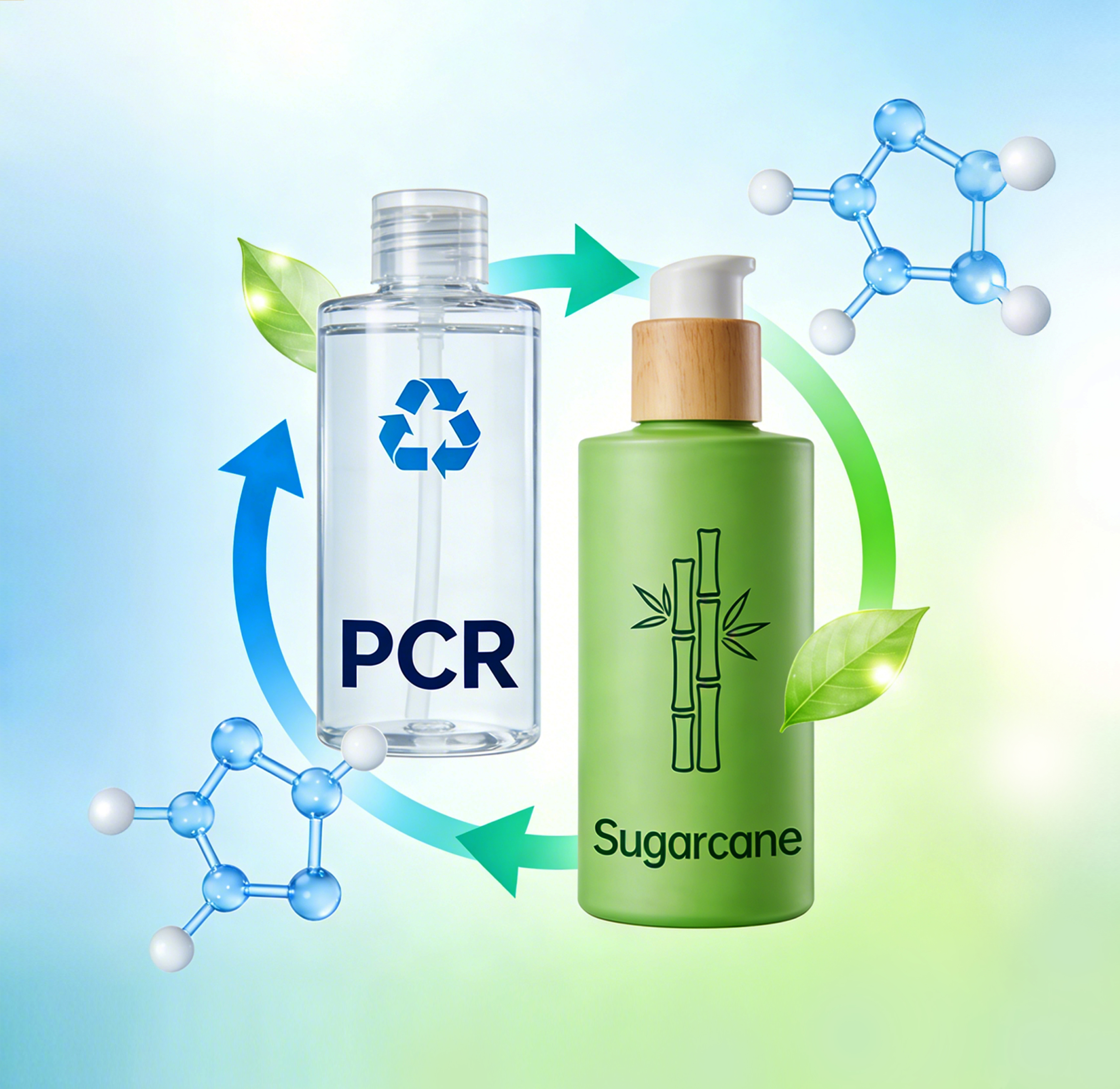
PCR materials
Bio based materials
Lightweight packaging
Mono material structures
Reduced material usage
Recyclability considerations
Refillable packaging concepts
However, sustainable packaging should be evaluated as a complete system.
The material, closure, decoration, filling process, transportation, product protection, and recycling infrastructure can all affect the environmental impact of the final package.
Brands should also make sustainability claims based on accurate and verifiable packaging specifications.
13. Do Bottles or Jars Offer Better Product Protection?
Neither bottles nor jars are automatically better for every formula.
The right choice depends on the product.
A jar provides convenient access to thick creams and masks but may involve more direct contact with the product during use.
A pump bottle can provide controlled dispensing and may reduce direct contact.
Airless packaging can be considered for formulas where minimizing air exposure is an important requirement.
Therefore, the best packaging should be selected according to the formula's stability requirements, application method, and consumer experience.
14. Don't Forget Packaging Compatibility Testing
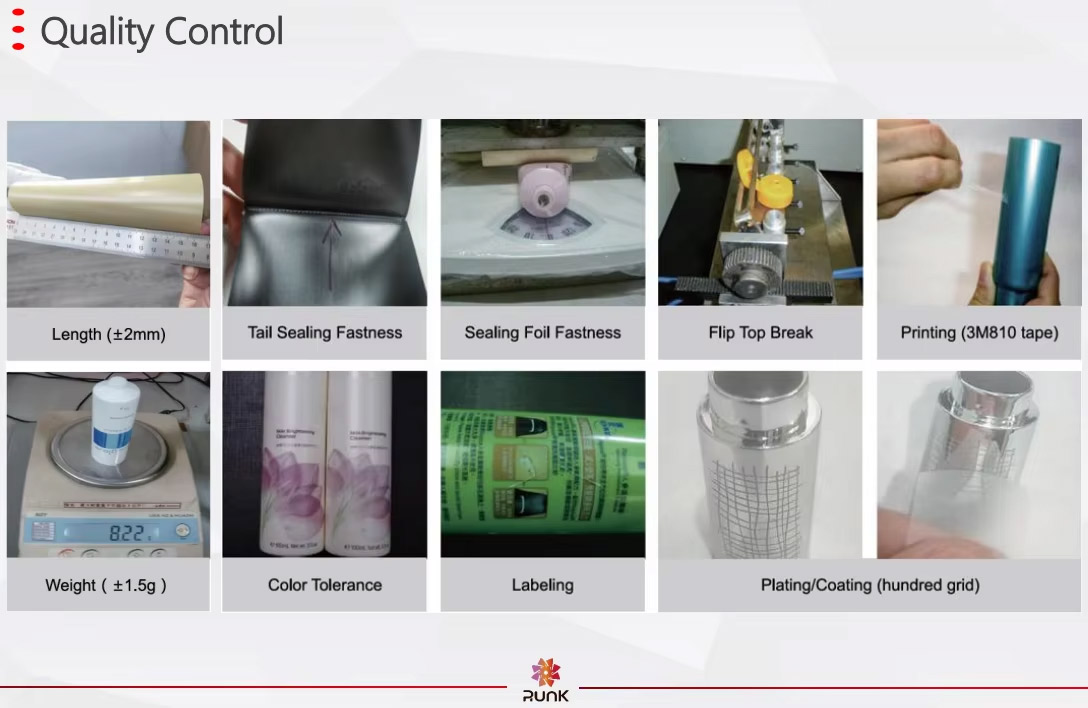
Before mass production, brands should test the actual formula in the final packaging.
Important testing may include:
Formula compatibility testing
Leakage testing
Dispensing testing
Cap compatibility testing
Drop testing
Transportation testing
Temperature testing
Appearance inspection
Printing inspection
Long term stability evaluation
Testing can help identify potential problems before large scale production.
For example, a formula may interact with a packaging material, affect the appearance of the container, change the dispensing performance, or cause leakage around the closure.
Testing the actual filled product is therefore an essential step in professional cosmetic packaging development.
15. Runk Custom Cosmetic Bottles and Jars
Runk provides customized cosmetic packaging solutions for beauty and personal care brands.
Our product range includes cosmetic bottles, cosmetic jars, Airless packaging, cosmetic tubes, and paper boxes, allowing brands to develop multiple packaging formats with one packaging partner.
Runk supports customization of:
Material
Capacity
Shape
Color
Bottle or jar structure
Cap
Pump
Decoration
Logo
Surface finish
For different product formulas, Runk can help customers evaluate suitable packaging structures according to their product type, viscosity, dispensing requirements, brand positioning, and target market.
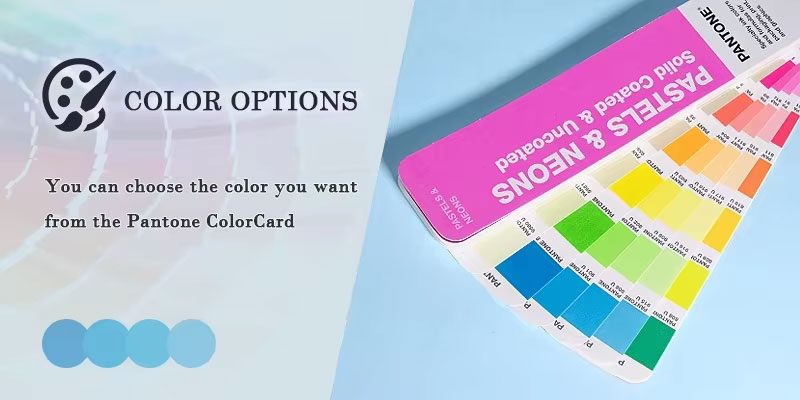
Available material options may include PP, PET, PETG, HDPE, PCR and other packaging solutions depending on the product and project requirements.
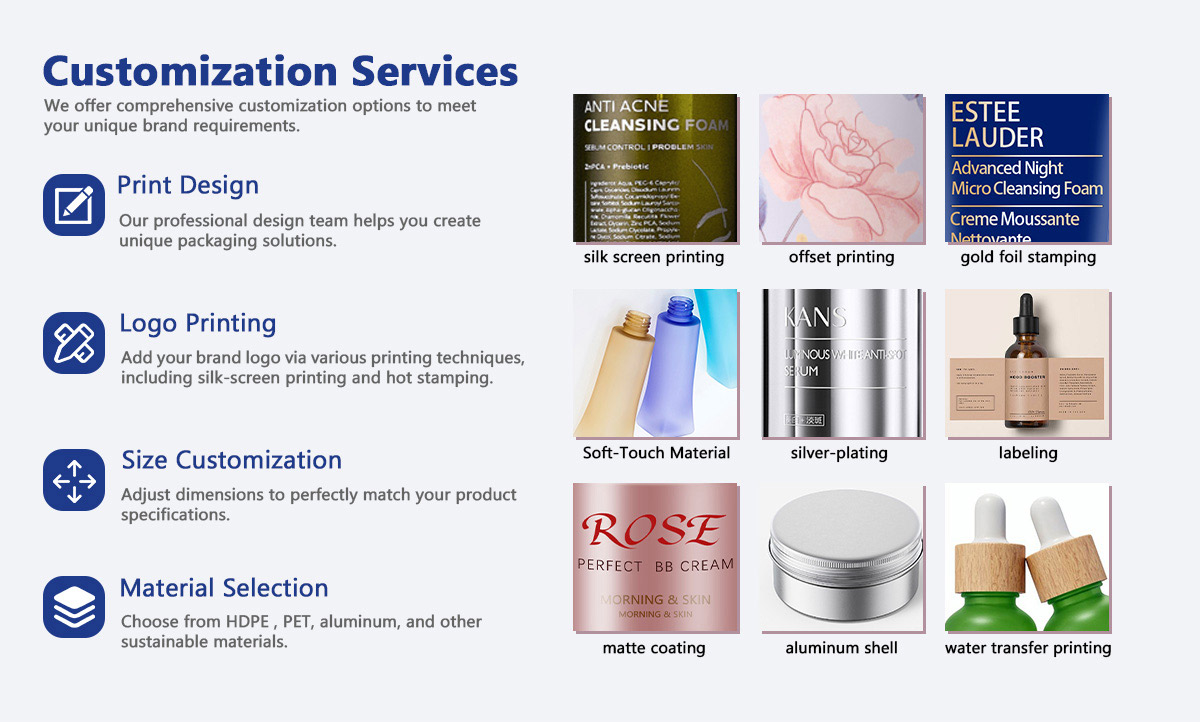
Decoration options can include:
Offset printing
Silk screen printing
Hot stamping
Frosted finish
Matte finish
Glossy finish
Pearl effects
Labeling
This allows brands to create packaging that is not only functional but also consistent with their visual identity.
Frequently Asked Questions About Cosmetic Bottles and Jars
1. What is the best packaging for facial serum?
It depends on the serum formula.
Low viscosity serums may work well with dropper or pump bottles, while thicker serums may require a different dispensing system.
Formula compatibility, dosage control, and product protection should be considered before selecting the packaging.
2. Should face cream be packaged in a bottle or jar?
Both options can work.
A jar is often convenient for thick face creams because of its wide opening.
A pump bottle or Airless system may be considered when controlled dispensing and reduced exposure are important.
The formula and intended user experience should determine the final choice.
3. What packaging is suitable for eye cream?
Eye creams are commonly packaged in small jars, tubes, pump bottles, or specialized applicator packaging.
The choice depends on viscosity, dosage requirements, formula protection, and the desired application experience.
4. Are cosmetic jars suitable for thick creams?
Yes.
Cosmetic jars are commonly used for thick creams, body butter, masks, balms, and other high viscosity products.
Their wide opening makes it easier for consumers to access thicker formulas.
5. What is the best bottle for body lotion?
A pump bottle is often a convenient option for body lotion because it allows consumers to dispense the product easily and control the amount.
Larger capacities such as 200ml, 300ml, or 500ml may be suitable for frequently used body care products.
6. Can one bottle be used for different formulas?
Not necessarily.
Different formulas may have different requirements for material compatibility, dispensing, barrier protection, and closure performance.
A packaging structure that works well for one formula may not be suitable for another.
Compatibility testing is recommended when developing a new product.
7. Is PET suitable for skincare packaging?
PET is widely used in cosmetic packaging and can be suitable for many skincare and personal care applications.
However, the suitability of PET depends on the specific formula, packaging structure, product requirements, and testing results.
8. Is PP suitable for cosmetic jars?
Yes.
PP is commonly used for cosmetic jars and closures. It offers flexibility in terms of color, shape, and packaging design and can be used for various skincare and beauty products.
9. What is Airless cosmetic packaging?
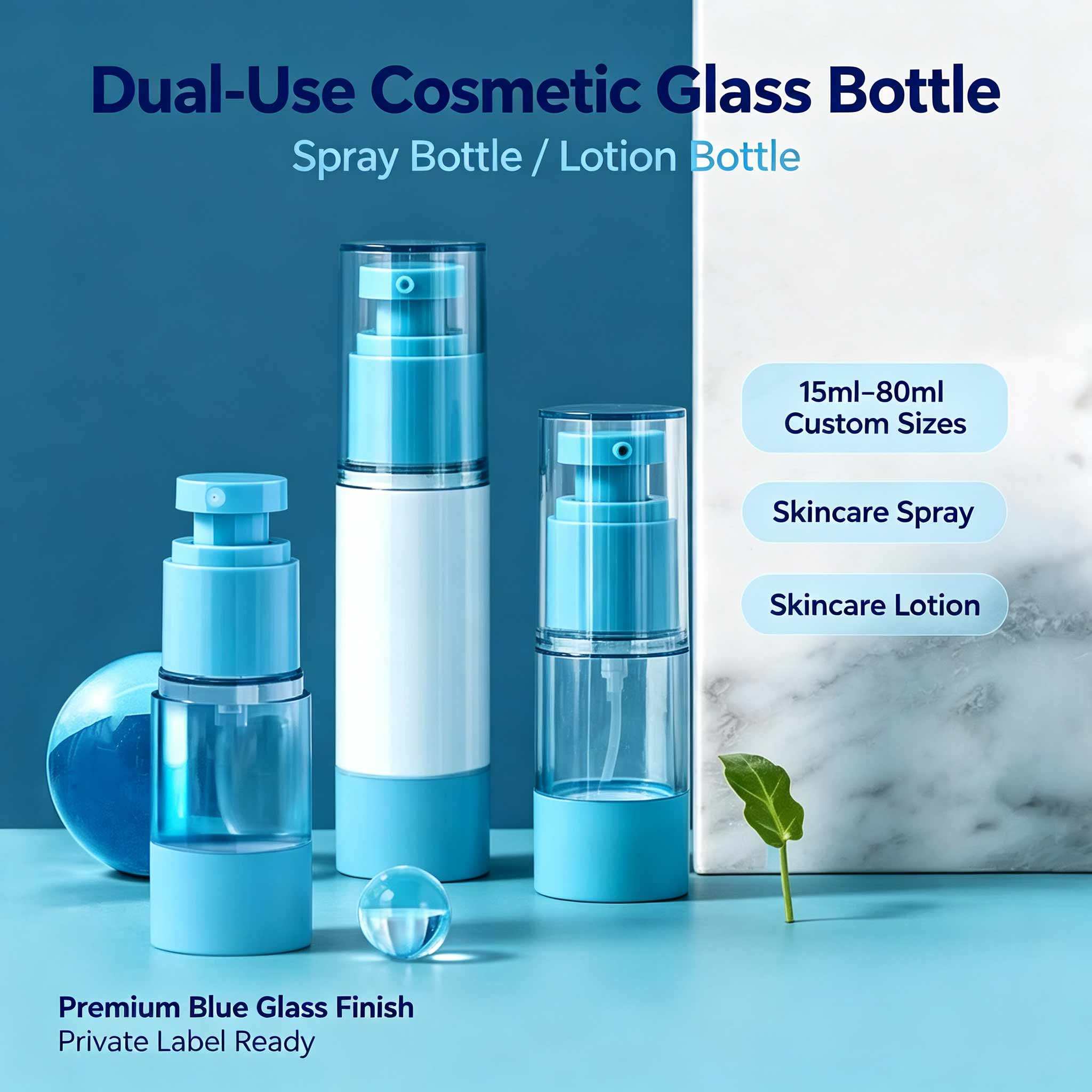
Airless packaging is a dispensing system designed to minimize direct air exposure to the remaining product during use.
It can be considered for certain sensitive skincare formulas where product protection and controlled dispensing are important.
The appropriate Airless system should still be validated against the actual formula.
10. Can cosmetic bottles and jars be customized?
Yes.
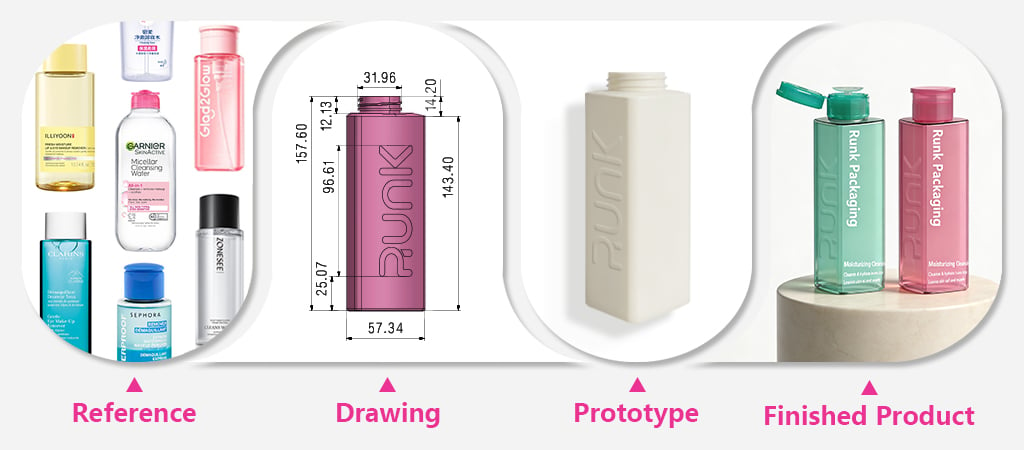
Cosmetic bottles and jars can be customized in terms of material, capacity, shape, color, closure, pump, decoration, and branding.
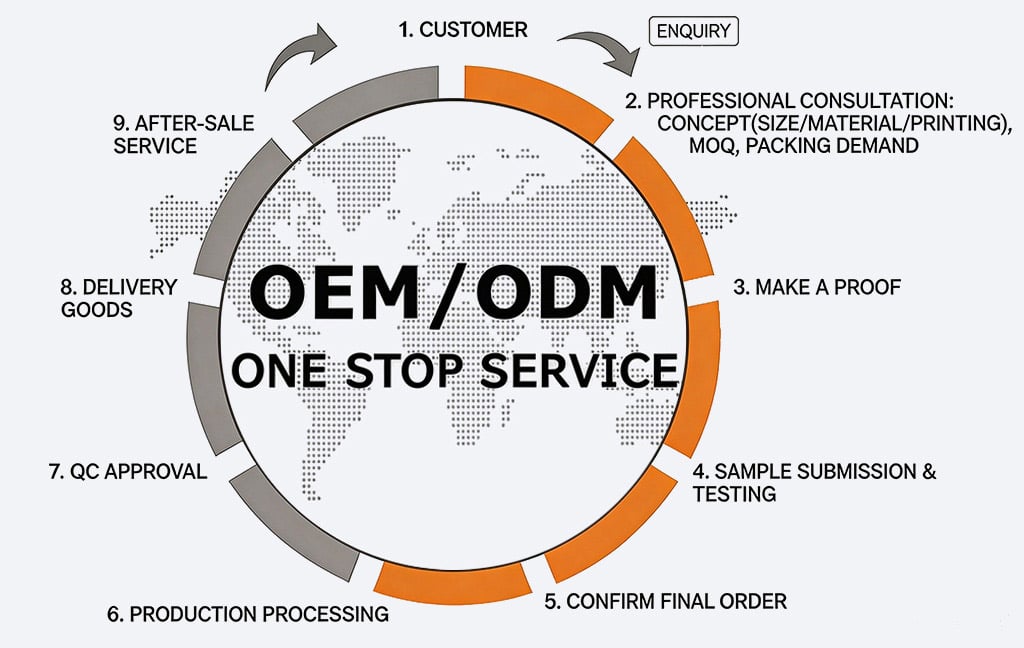
Runk provides OEM and ODM cosmetic packaging solutions for brands looking for customized packaging.
11. What information should I provide when requesting a quotation?
To receive a more accurate packaging recommendation and quotation, brands can provide:
Product type
Formula type
Formula viscosity
Required capacity
Preferred material
Packaging shape
Closure preference
Decoration requirements
Estimated order quantity
Target market
Delivery destination
If available, providing the formula's basic characteristics or an existing packaging sample can also help the packaging team evaluate suitable options.
12. Can Runk help me choose packaging if I am launching a new product?
Yes.
You do not necessarily need to have a complete packaging specification before contacting Runk.
You can provide your product category, capacity, reference images, preferred style, or basic formula requirements.
Runk can then help evaluate suitable bottles, jars, tubes, Airless packaging, and other cosmetic packaging solutions based on your project requirements.
Final Thoughts
Selecting cosmetic bottles and jars should begin with the formula, not simply the appearance of the packaging.
The ideal packaging solution should provide an appropriate balance between:
Formula Compatibility
Product Protection
Dispensing Performance
User Experience
Brand Appearance
Sustainability
Production Cost
Market Requirements
A liquid toner, lightweight serum, rich face cream, body lotion, eye cream, hair mask, and body scrub may all require completely different packaging solutions.
By understanding the formula first and then evaluating material, capacity, dispensing system, design, and testing requirements, cosmetic brands can reduce packaging development risks and create a better experience for their customers.
Whether you are developing a new skincare product, refreshing an existing product line, or looking for customized cosmetic packaging, Runk provides OEM and ODM solutions covering cosmetic bottles, jars, tubes, Airless packaging, and paper boxes.
Have a new cosmetic packaging project?
Share your product type, formula characteristics, capacity, quantity, and design requirements with Runk, and explore the right packaging solution for your beauty brand.
Runk — Custom Cosmetic Packaging Solutions for Beauty Brands
Contact : [email protected] | +86-13128608159
Website :
https://www.runkbottle.com | https://www.runkgroup.com | https://runkpackaging.en.alibaba.com
Based in Guangzhou, China – serving beauty brands worldwide.
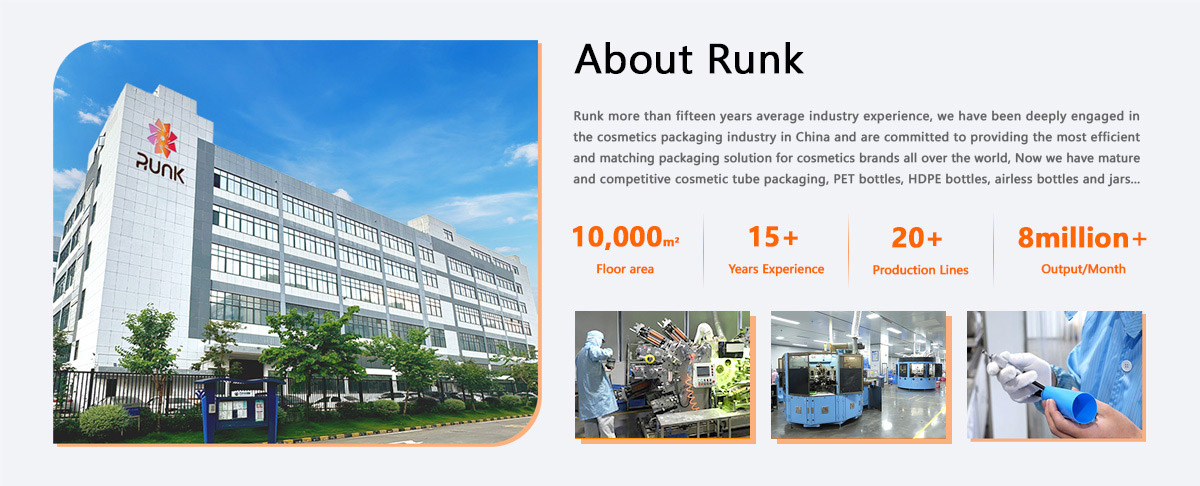
Table of Contents
- How To Select Cosmetic Bottles and Jars for Different Formulas and Products
- 1. Start With the Formula
- 2. Choose Bottles for Liquid and Lightweight Formulas
- 3. Choose Cosmetic Jars for Creams and Thick Formulas
- 4. When Should You Choose a Cosmetic Bottle?
- 5. When Should You Choose a Cosmetic Jar?
- 6. Consider the Packaging Material
- 7. Match the Packaging With Formula Viscosity
- 8. Consider Formula Protection
- 9. Consider the User Experience
- 10. Think About Capacity and Product Positioning
- 11. Choose Packaging Based on Your Brand Positioning
- 12. Consider Sustainability
- 13. Do Bottles or Jars Offer Better Product Protection?
- 14. Don't Forget Packaging Compatibility Testing
- 15. Runk Custom Cosmetic Bottles and Jars
- Frequently Asked Questions About Cosmetic Bottles and Jars
- 1. What is the best packaging for facial serum?
- 2. Should face cream be packaged in a bottle or jar?
- 3. What packaging is suitable for eye cream?
- 4. Are cosmetic jars suitable for thick creams?
- 5. What is the best bottle for body lotion?
- 6. Can one bottle be used for different formulas?
- 7. Is PET suitable for skincare packaging?
- 8. Is PP suitable for cosmetic jars?
- 9. What is Airless cosmetic packaging?
- 10. Can cosmetic bottles and jars be customized?
- 11. What information should I provide when requesting a quotation?
- 12. Can Runk help me choose packaging if I am launching a new product?
- Final Thoughts