EN
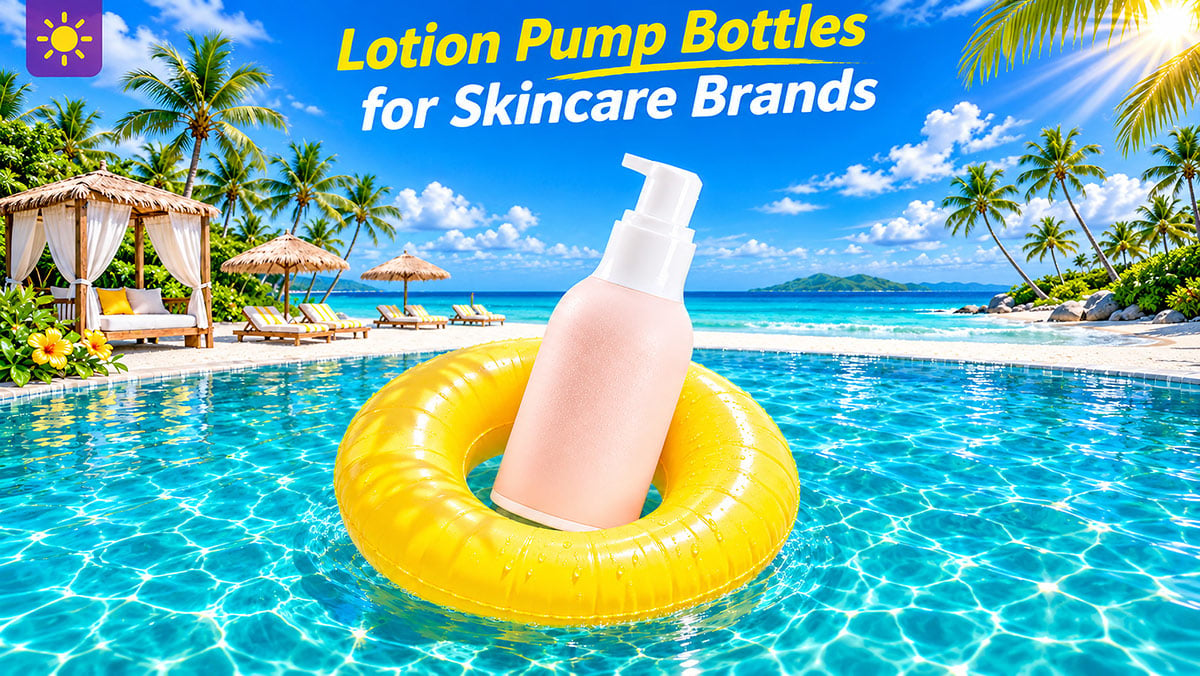
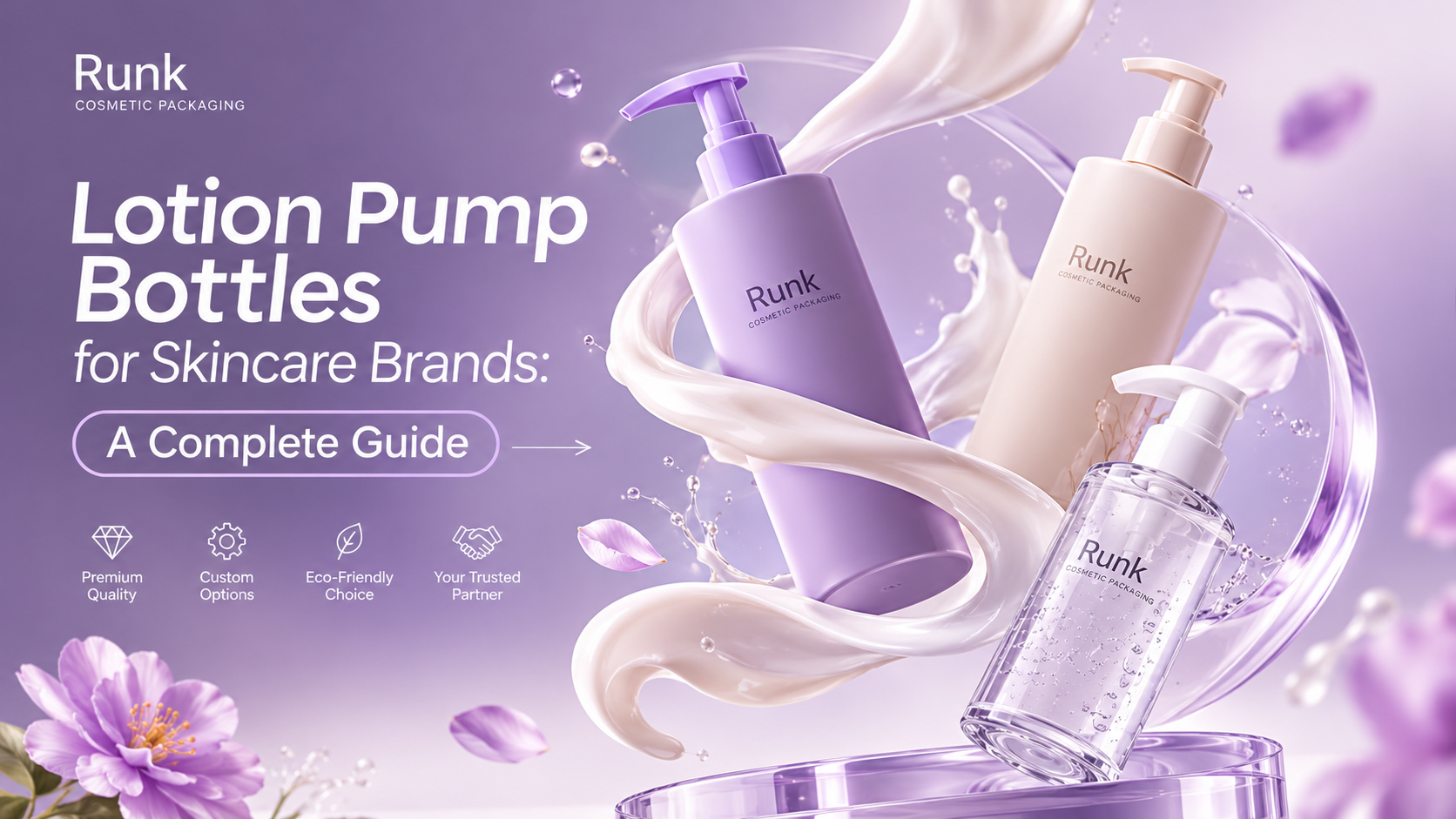
Lotion Pump Bottles for Skincare Brands: A Complete Guide
Introduction: Why Lotion Pump Bottles Matter for Skincare Brands
In the competitive skincare and personal care market, packaging is more than just a container. It plays an important role in protecting formulations, improving the user experience, communicating brand identity, and influencing purchasing decisions.
Among the many cosmetic packaging options available, lotion pump bottles remain one of the most popular choices for skincare brands. Their convenient dispensing mechanism, hygienic application, and versatile designs make them suitable for a wide range of products, including facial lotions, body lotions, moisturizers, serums, cleansers, and sunscreen products.
For skincare brands looking to develop new products or upgrade existing packaging, choosing the right lotion pump bottle requires careful consideration of capacity, material, pump performance, appearance, and customization options.
As a professional cosmetic packaging manufacturer, Runk provides customized cosmetic bottles and packaging solutions for skincare and personal care brands worldwide.
In this guide, we will explore everything you need to know about lotion pump bottles, from their structures and materials to customization options and wholesale purchasing considerations.
1. What Are Lotion Pump Bottles?
Lotion pump bottles are cosmetic containers equipped with a pump dispenser that releases a controlled amount of liquid or lotion when pressed.
Unlike traditional screw-cap bottles, pump bottles allow users to dispense products conveniently without pouring or directly touching the contents inside the container.
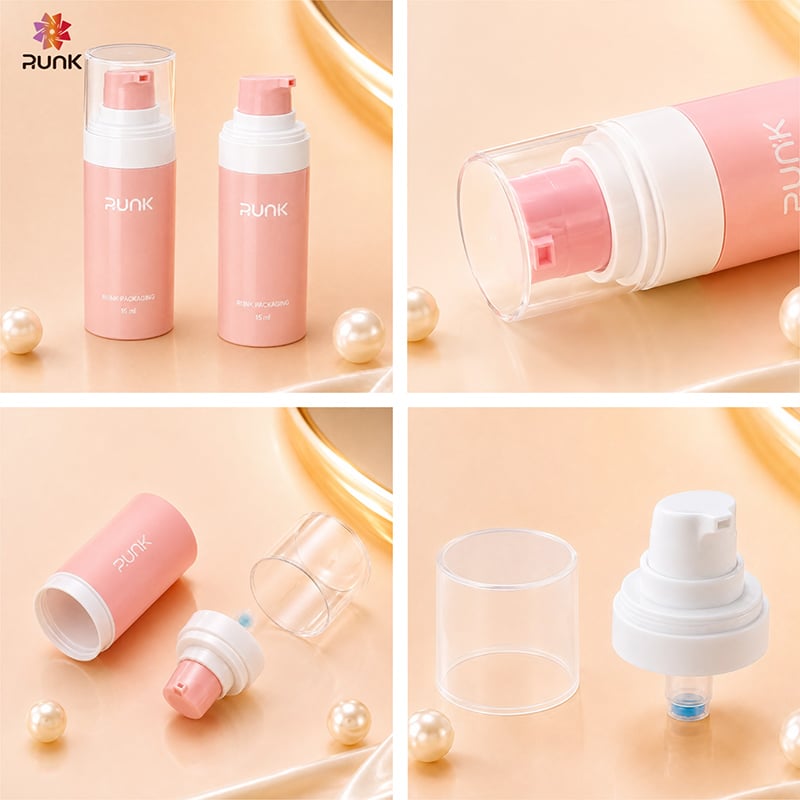
A typical lotion pump bottle consists of several components:
Bottle Body: Holds the skincare formulation and determines the overall appearance and capacity.
Lotion Pump: The dispensing mechanism that controls product output.
Pump Head: The part pressed by the user to release the product.
Dip Tube: Transfers the formulation from the bottom of the bottle to the pump mechanism.
Closure or Locking Mechanism: Helps prevent accidental dispensing during storage and transportation.
Depending on the design, lotion pump bottles can feature screw-on pumps, press pumps, locking pumps, or other dispensing structures.
Their practical design makes them suitable for both everyday skincare products and premium cosmetic packaging collections.
2. Different Types of Lotion Pump Bottles for Skincare Products
Different skincare formulations require different packaging solutions. Selecting the appropriate bottle and pump combination can improve product usability and create a better consumer experience.
2.1 Standard Lotion Pump Bottles
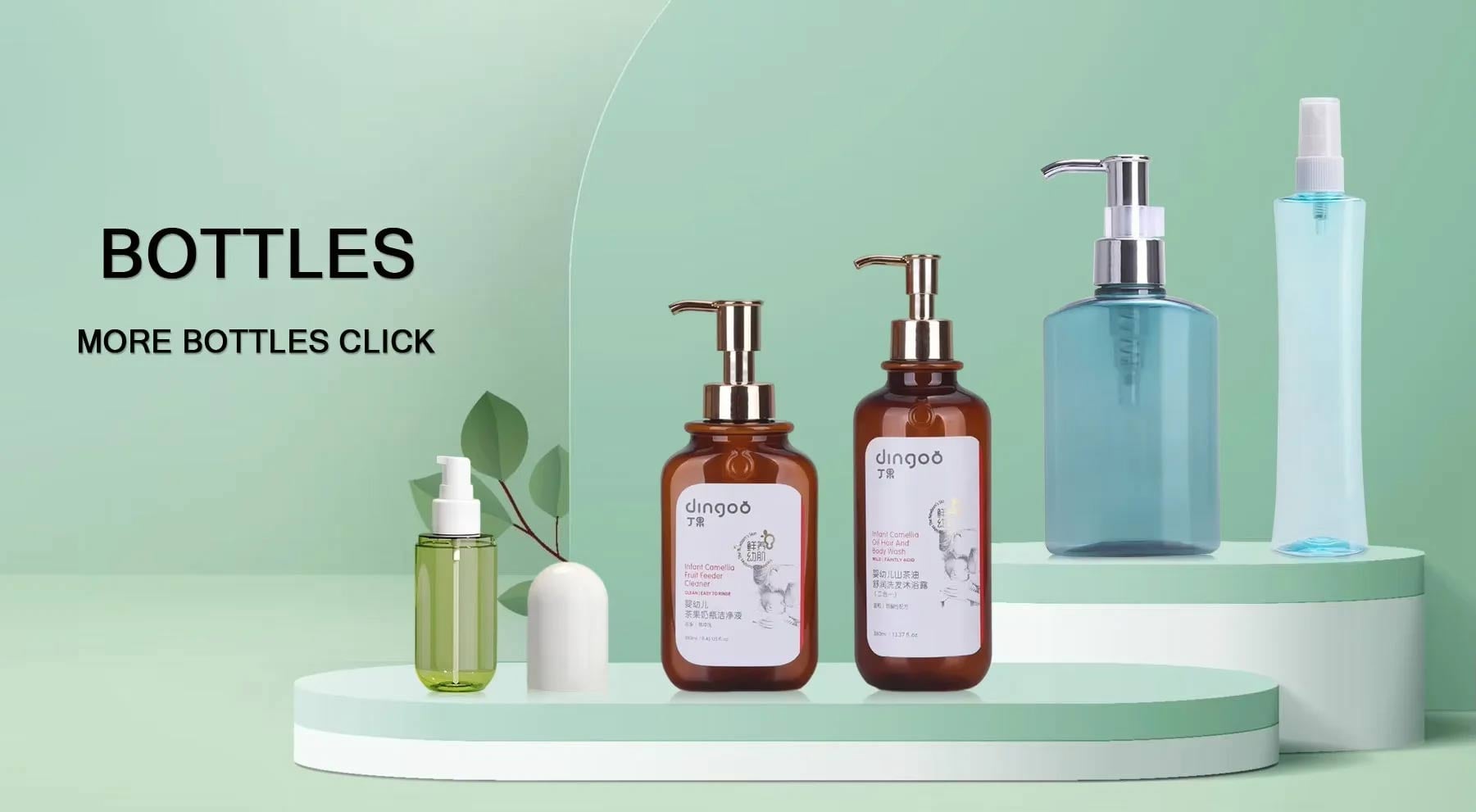
Standard lotion pump bottles are widely used for liquid and medium-viscosity skincare products.
They are commonly selected for:
Body lotions
Facial moisturizers
Hand lotions
Cleansing lotions
Daily skincare products
Available in different shapes, capacities, and colors, these bottles are suitable for mass-market and professional skincare brands.
2.2 Airless Pump Bottles
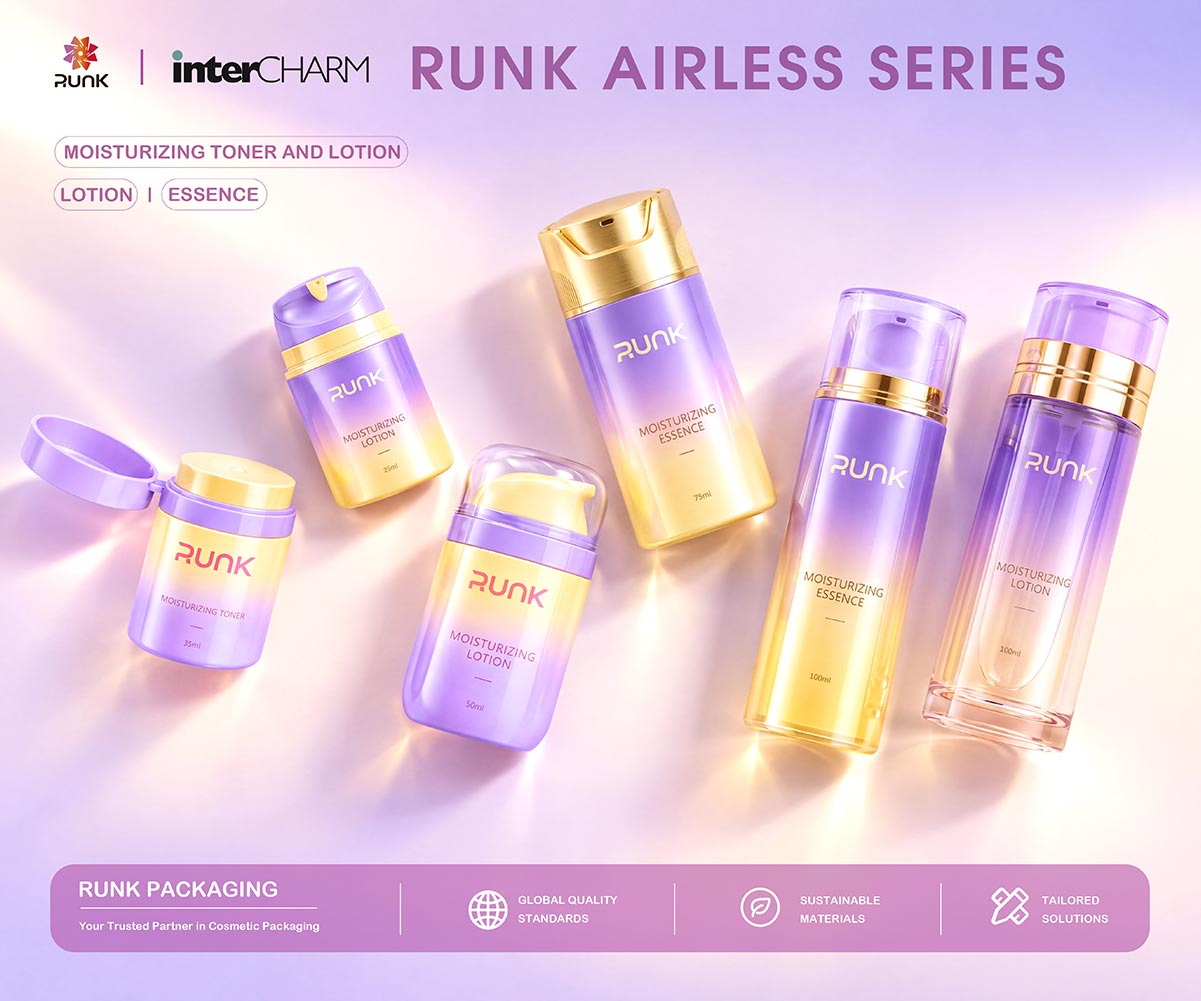
Airless pump bottles are designed with an internal piston system that moves upward as the product is dispensed.
This structure helps minimize air exposure and reduces product residue inside the container.
They are particularly suitable for:
Facial creams and lotions
Anti-aging skincare products
Premium serums
Sensitive skincare formulations
High-value cosmetic products
Airless packaging can provide additional protection for certain formulations, although compatibility and stability testing are still necessary.
2.3 Fine Mist Spray Bottles
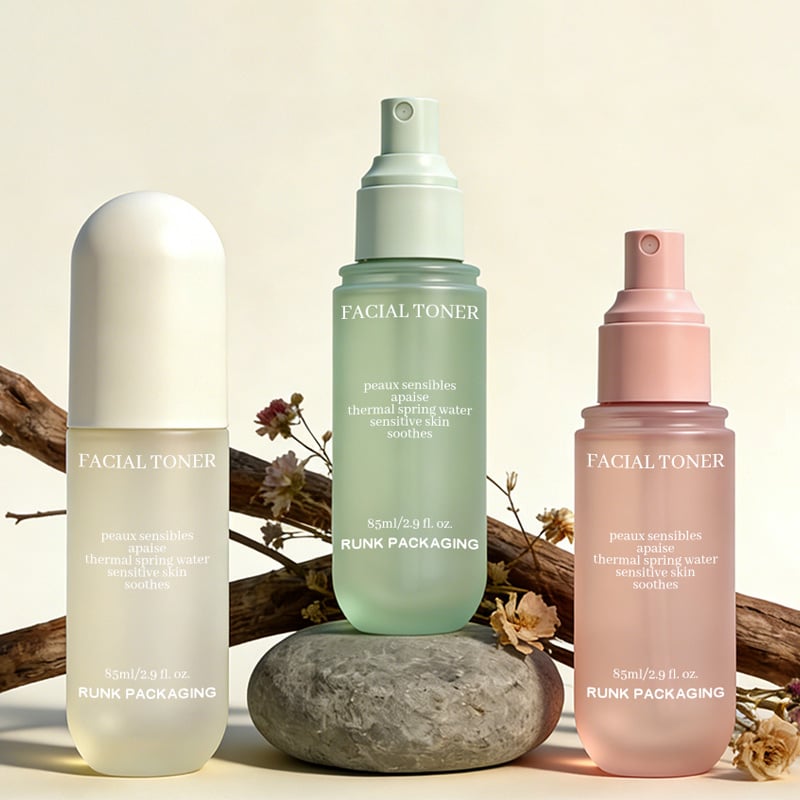
Although fine mist spray bottles use a different dispensing mechanism, they are another popular packaging choice for liquid skincare and personal care products.
They are suitable for:
Facial toners
Hydrating facial mists
Body sprays
Refreshing skincare products
Hair care sprays
Brands can choose between lotion pumps and spray pumps according to the viscosity and intended application of their formulations.
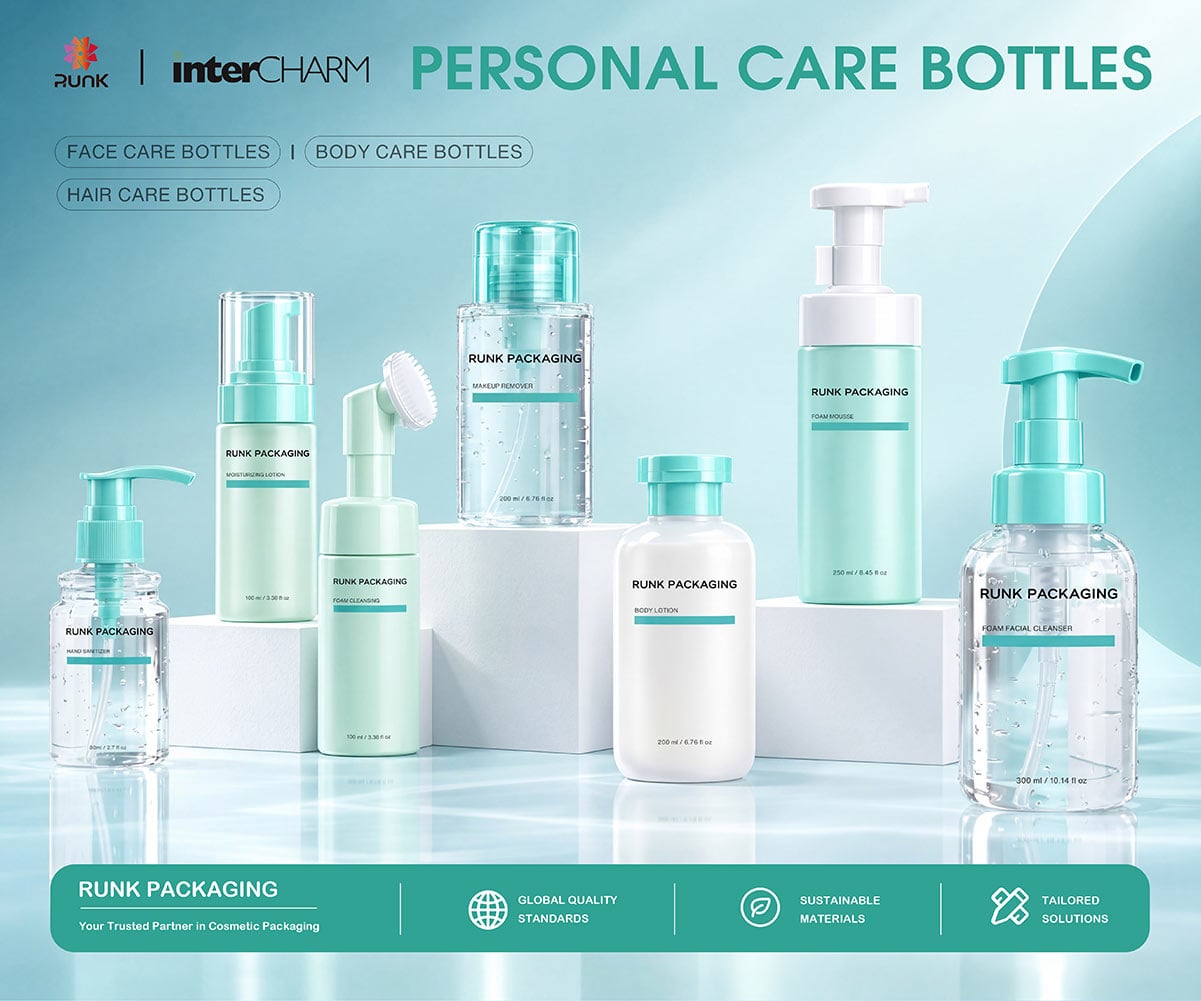
2.4 Foam Pump Bottles
Foam pump bottles mix liquid formulations with air to create foam during dispensing.
They are commonly used for:
Facial cleansers
Hand soaps
Foaming body washes
Gentle cleansing products
Foam pumps offer convenient application and can create a distinctive user experience.
3. Common Materials Used for Lotion Pump Bottles
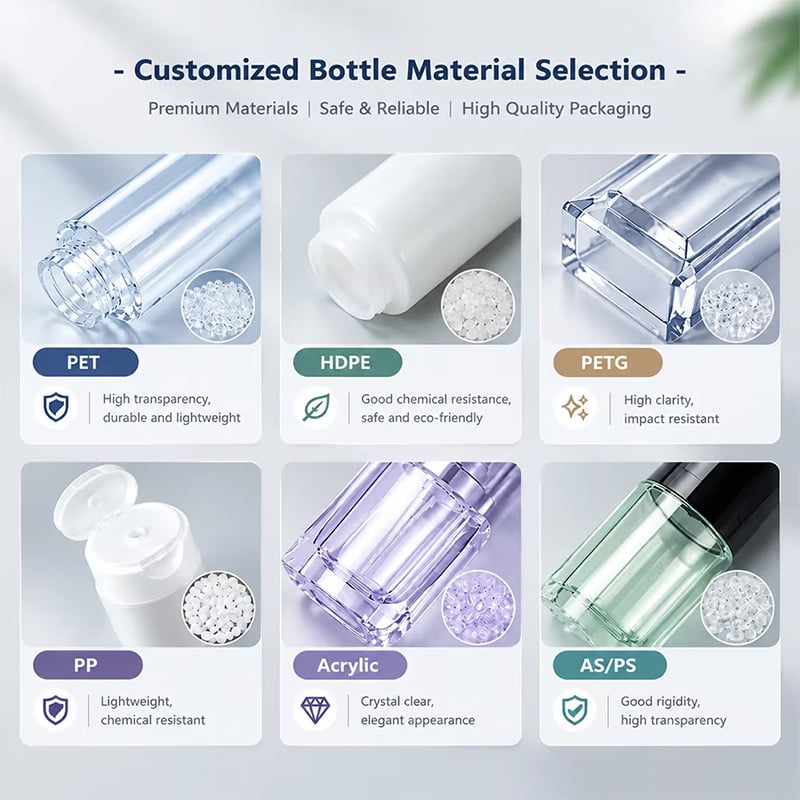
Material selection is one of the most important decisions when developing cosmetic packaging. Different materials offer different advantages in terms of appearance, durability, chemical compatibility, sustainability, and cost.
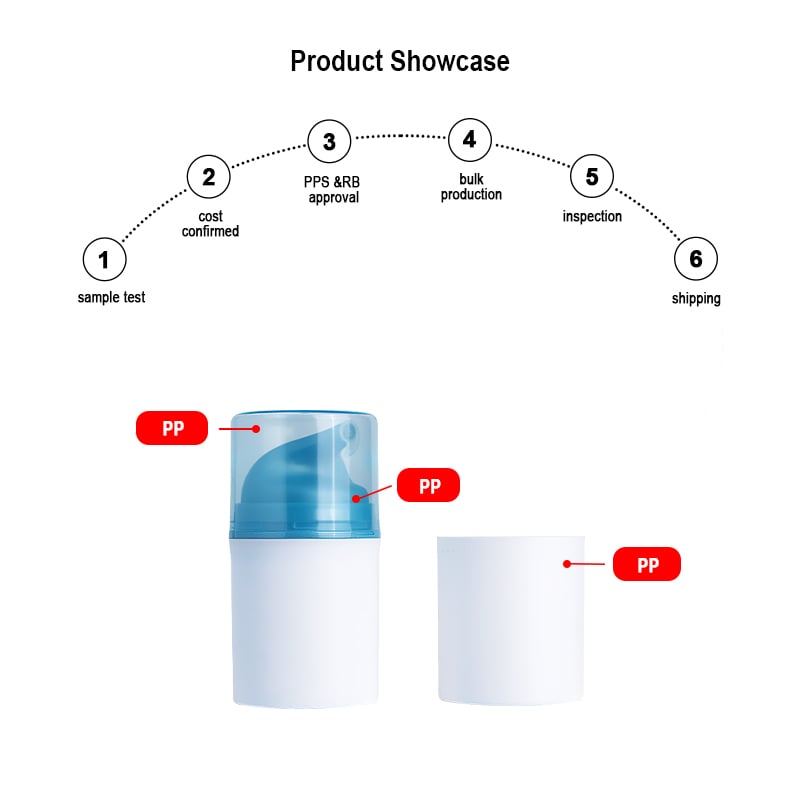
3.1 PP (Polypropylene)
PP is a widely used material in cosmetic packaging.
Its advantages include:
Good chemical resistance for many formulations
Lightweight construction
Good durability
Flexible design possibilities
Suitability for various surface finishes
PP lotion pump bottles are commonly used for body lotions, moisturizers, and personal care products.
3.2 PET (Polyethylene Terephthalate)
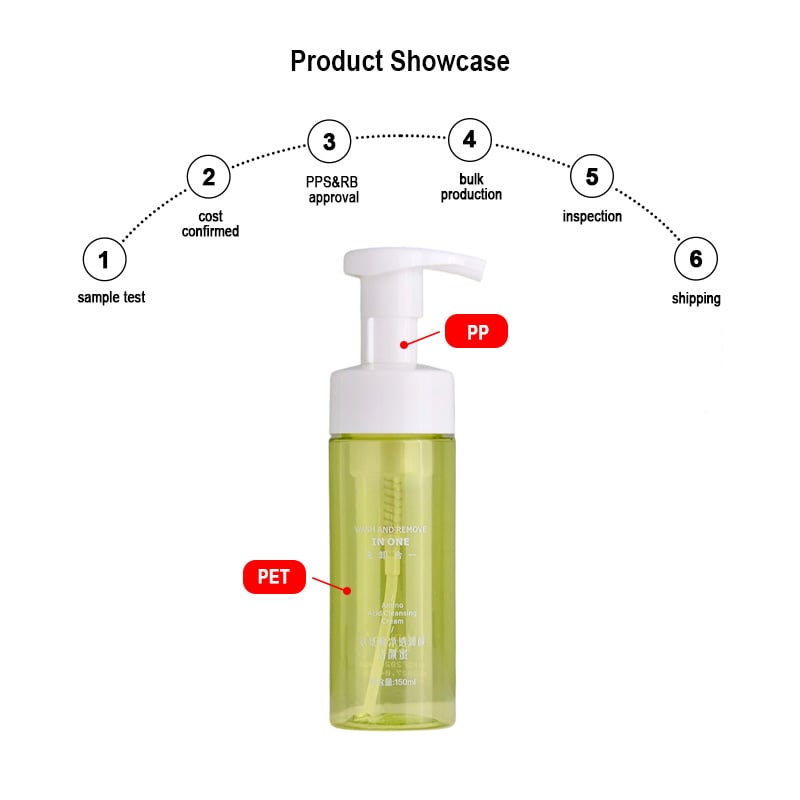
PET is popular for cosmetic bottles because of its transparency, lightweight properties, and attractive appearance.
Key benefits include:
Excellent transparency
Good visual presentation of the product inside
Lightweight and convenient handling
Multiple bottle shape possibilities
PET bottles are commonly used for liquid skincare products, lotions, and personal care formulations.
3.3 PETG
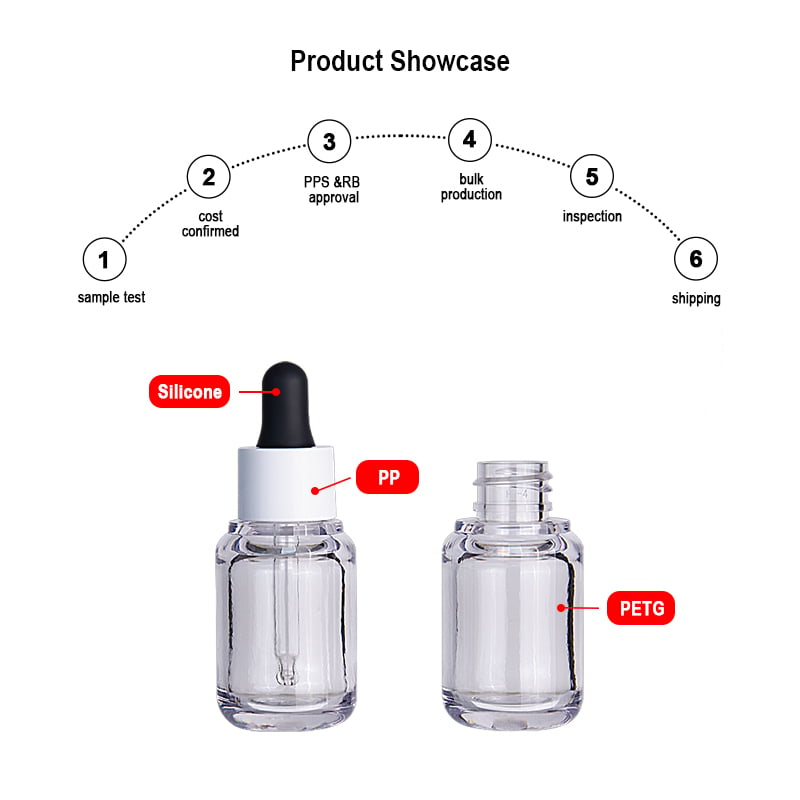
PETG is another popular option for premium cosmetic packaging.
It offers good transparency and design flexibility, making it suitable for brands seeking an elegant and sophisticated packaging appearance.
PETG bottles can be developed in different shapes, colors, and decorative finishes.
3.4 HDPE
HDPE is known for its durability and good chemical resistance.
It is frequently selected for practical and everyday personal care packaging, particularly when a more opaque bottle appearance is preferred.
Important: The best packaging material depends on the formulation, storage conditions, filling process, and compatibility requirements. Brands should conduct appropriate compatibility and stability testing before mass production.
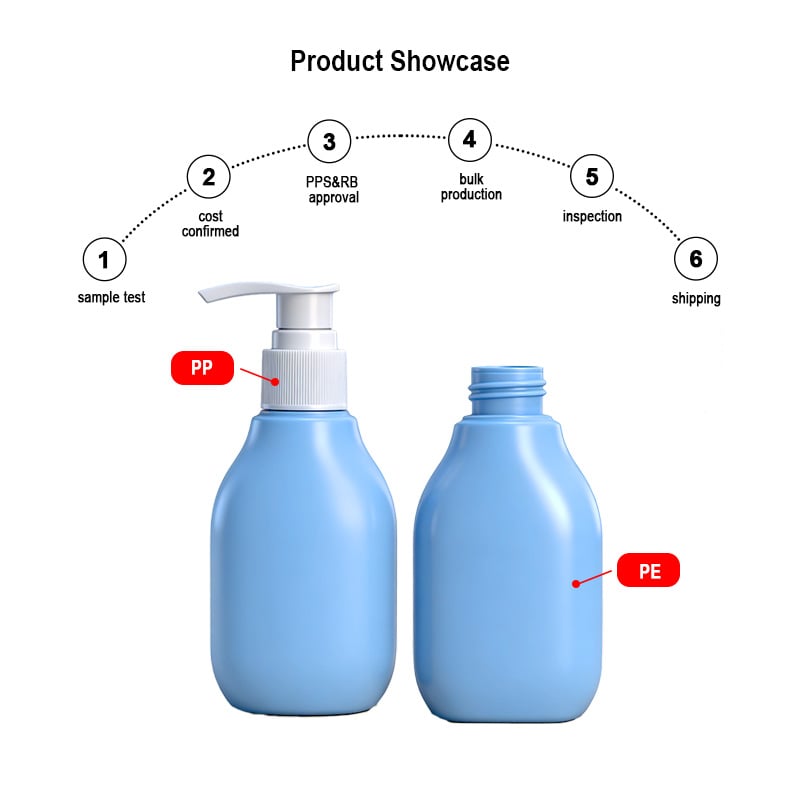
4. How to Choose the Right Capacity for Lotion Pump Bottles
Capacity selection directly affects product positioning, consumer convenience, transportation costs, and retail pricing.
Different skincare products have different packaging requirements.
Here are some common capacity options:
| Bottle Capacity | Common Applications |
|---|---|
| 15ml–30ml | Facial serums, travel-size skincare |
| 50ml–100ml | Facial lotions, moisturizers, daily skincare |
| 120ml–150ml | Facial cleansers, body lotions |
| 200ml–250ml | Body lotions, hand wash, personal care |
| 300ml–500ml | Body wash, shampoo, family-size skincare |
These are general market references rather than fixed industry standards.
When choosing capacity, skincare brands should consider:
Product positioning and target consumers
Recommended usage frequency
Retail price and product size
Packaging and shipping costs
Shelf display requirements
Filling line compatibility
For example, a 50ml or 100ml lotion pump bottle may be suitable for facial skincare collections, while 250ml or 300ml bottles are commonly used for body lotions and daily personal care products.
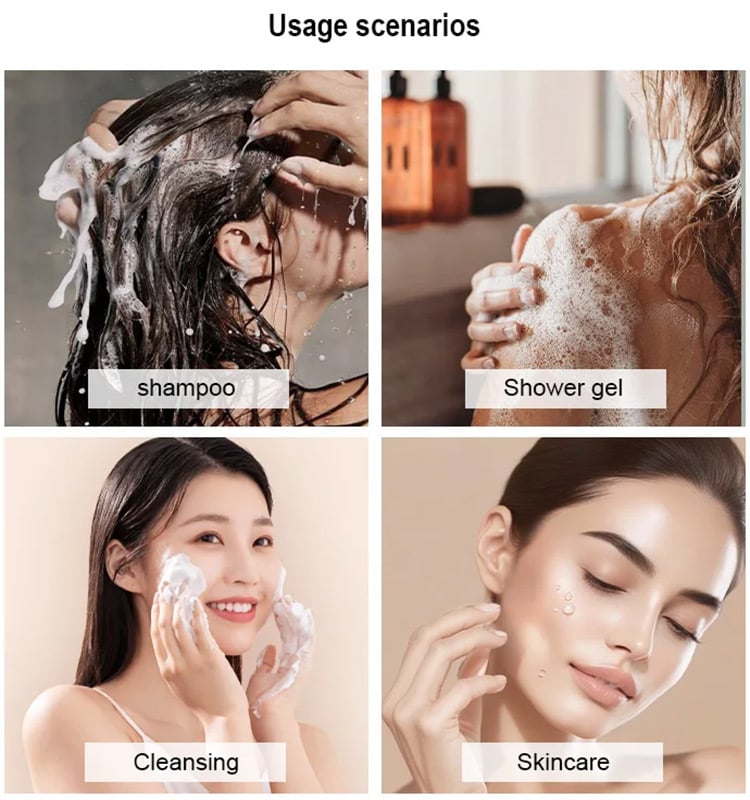
5. Customization Options for Lotion Pump Bottles
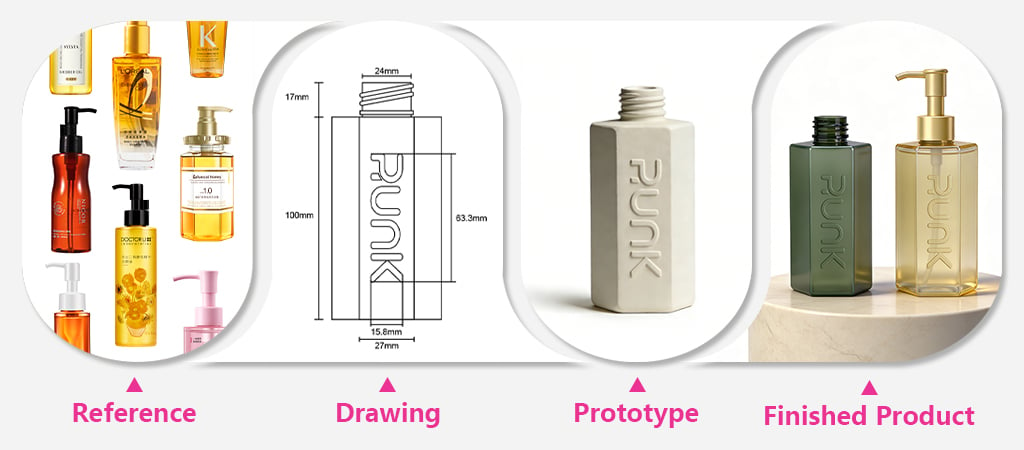
In today's competitive beauty market, customized packaging helps skincare brands establish a recognizable visual identity.
At Runk, we offer different customization possibilities to help customers develop packaging that matches their brand positioning.
5.1 Custom Bottle Colors
Color is one of the most effective ways to communicate brand identity.
Customers can select customized colors according to Pantone references.
Popular options include:
Classic white and black
Soft pastel colors
Natural and earthy tones
Transparent and translucent colors
Premium metallic-inspired finishes
Customized colors can help create a consistent packaging style across an entire skincare collection.
5.2 Custom Bottle Shapes
Bottle shape influences both visual appeal and practical handling.
Common designs include:
Round bottles
Square bottles
Flat rectangular bottles
Cylindrical bottles
Unique customized shapes
Brands can select existing bottle designs or discuss customized packaging development according to their product requirements.
5.3 Surface Decoration and Printing
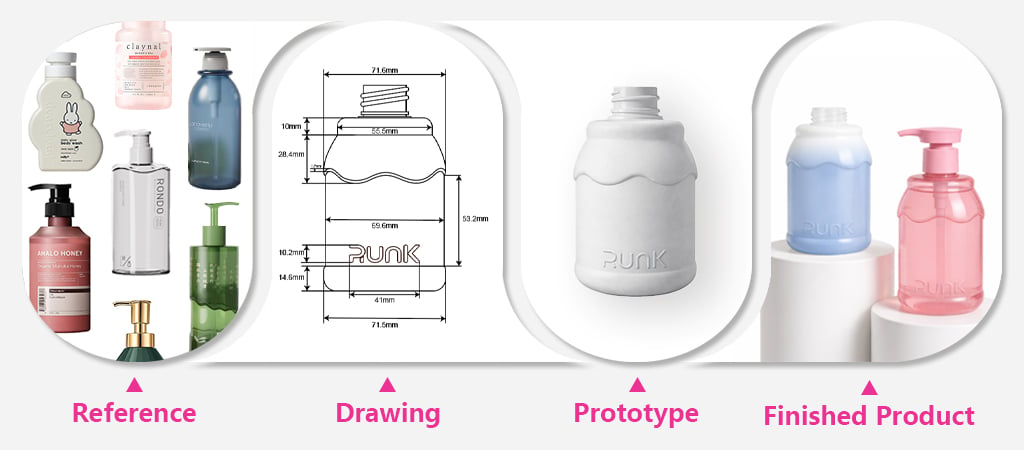
Surface decoration is essential for displaying brand logos, product information, and visual elements.
Available decoration options include:
Silk Screen Printing: Suitable for displaying brand logos, product names, and decorative graphics directly on bottle surfaces.
Hot Stamping: Creates metallic decorative effects, commonly used for premium cosmetic packaging.
Plating: Provides an attractive metallic appearance for selected packaging components.
Frosted Finish: Creates a soft, elegant appearance and a pleasant surface texture.
Matte Coating: Offers a refined, understated look that works well with modern skincare branding.
Glossy Finish: Creates a smooth, reflective surface for a clean and polished appearance.
Labeling: Allows brands to display detailed product information and customized graphic designs.
Combining different decorative techniques can help brands create distinctive cosmetic packaging.
5.4 Custom Lotion Pump Options
The pump dispenser is just as important as the bottle body.
Brands should consider:
Pump head design
Dispensing output per stroke
Pump color
Locking mechanism
Dip tube length
Compatibility with the formulation
Different pump structures can provide different dispensing experiences.
For example, a lotion pump designed for lightweight facial lotion may not perform equally well with a thicker body cream.
Therefore, pump selection should always be based on the actual viscosity and dispensing requirements of the product.
6. How to Select the Right Lotion Pump for Your Formulation
A suitable lotion pump should dispense the product smoothly, consistently, and without excessive leakage.
Before selecting a pump, consider the following factors.
Product Viscosity
Viscosity affects how easily a formulation moves through the pump mechanism.
Low-viscosity products: Lightweight lotions and liquid skincare products.
Medium-viscosity products: Facial moisturizers and body lotions.
High-viscosity products: Thick creams and richer skincare formulations.
The pump structure and output should be tested with the actual formulation.
Dispensing Output
Pump output refers to the amount of product dispensed with each press.
A smaller output may be appropriate for concentrated skincare products, while a larger output can be more convenient for body lotions.
Brands should select an output that matches the recommended dosage and product usage.
Leakage Prevention
Leakage is an important consideration during transportation, storage, and daily use.
A reliable pump should provide appropriate sealing and locking performance.
Brands should request testing for:
Leakage resistance
Pump activation performance
Repeated dispensing
Closure security
Transportation conditions
Formulation Compatibility
Some cosmetic ingredients may interact with packaging materials or dispensing components.
Compatibility testing should evaluate the complete packaging system, including the bottle body, pump, dip tube, gasket, and other relevant components.
7. Sustainable Lotion Pump Bottle Packaging Trends
Sustainability has become an increasingly important consideration for skincare brands and cosmetic packaging manufacturers.
Consumers are paying more attention to packaging materials, recyclability, and responsible manufacturing practices.
Several packaging approaches are gaining attention.
Recyclable Plastic Packaging
PP, PET, and HDPE are commonly used in plastic packaging and may be recyclable where suitable collection and processing systems exist.
Brands should consider local recycling infrastructure and packaging design when developing recyclable solutions.
PCR Plastic Packaging
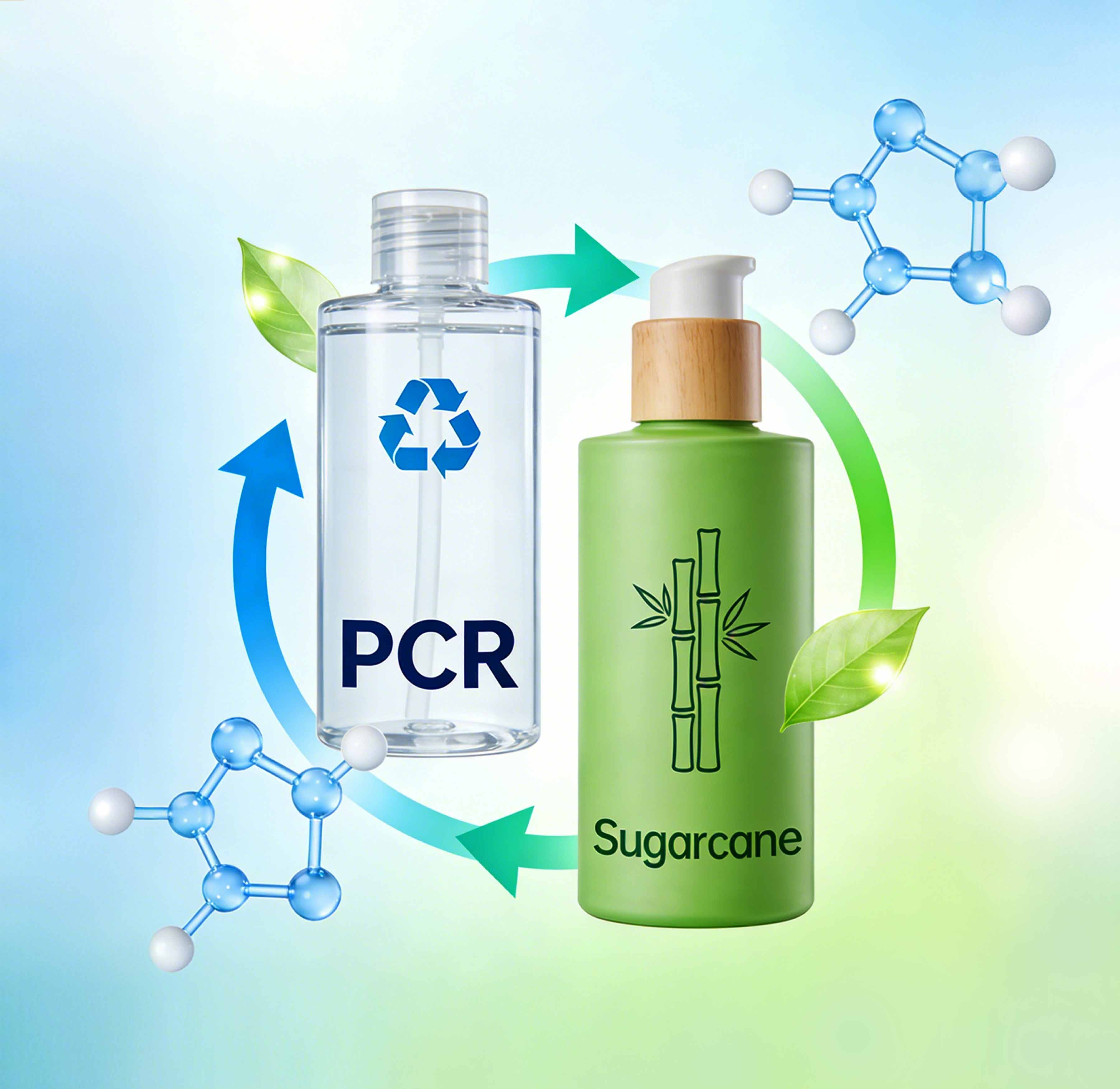
PCR stands for Post-Consumer Recycled material.
It is produced from recycled materials recovered after consumer use.
Using PCR materials can help brands incorporate recycled content into their packaging strategies and reduce reliance on virgin plastic.
Refillable Packaging Concepts
Refillable packaging is another approach that some skincare brands are exploring.
A refillable bottle system allows consumers to reuse the outer packaging while replacing the product container or refill component.
However, refill systems need to be designed with suitable hygiene, sealing, durability, and compatibility requirements.
Lightweight Packaging Design
Reducing unnecessary packaging weight can help lower material consumption and potentially improve transportation efficiency.
For skincare brands, sustainable packaging development should balance environmental considerations, product protection, functionality, and cost.
8. What Should Skincare Brands Consider When Buying Wholesale Lotion Pump Bottles?
Choosing a reliable cosmetic packaging supplier is essential for successful product development and long-term business cooperation.
Before placing a wholesale order, consider the following factors.
1. Manufacturer Experience
Work with a supplier that understands cosmetic packaging structures, material characteristics, production processes, and customization requirements.
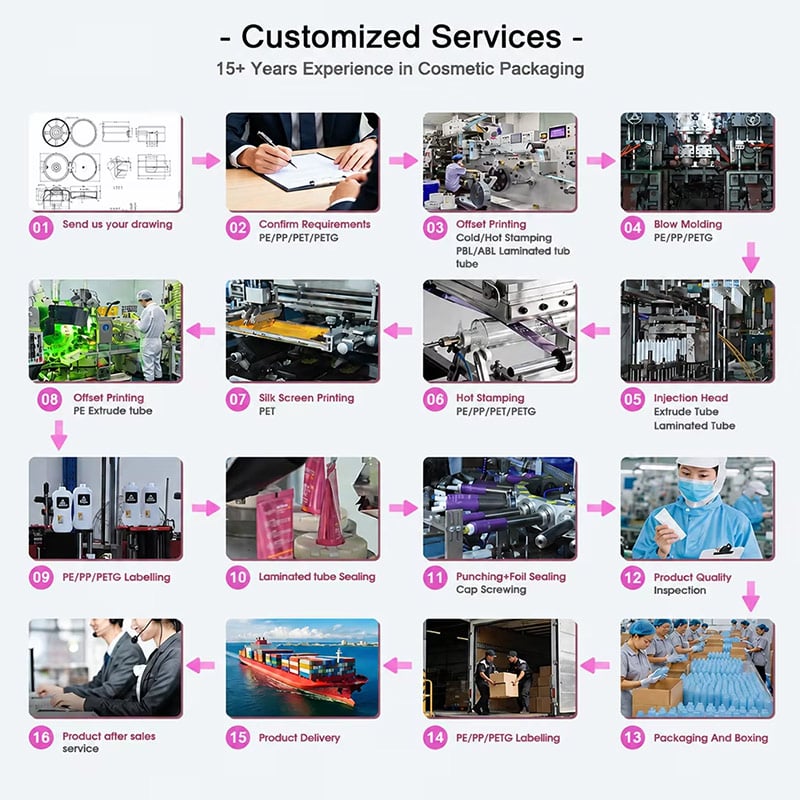
2. Product Quality Control
Ask about quality inspection procedures, including:
Bottle appearance inspection
Dimensional measurements
Pump dispensing tests
Leakage tests
Assembly inspection
Packaging inspection
3. Sample Availability
Request samples before mass production.
Samples allow your team to evaluate the bottle appearance, pump performance, material quality, and compatibility with your formulation.
4. Customization Capabilities
Check whether the supplier can provide customized capacities, colors, materials, printing, and surface decoration.
5. Production Lead Time and MOQ
Confirm the minimum order quantity (MOQ), sampling time, production schedule, and delivery arrangements.
These details help brands manage product launch schedules and inventory planning.
6. Communication and After-Sales Support
Reliable communication is essential throughout the packaging development process.
A professional supplier should be able to provide clear product information, technical suggestions, sample coordination, and production updates.
9. Why Choose Runk for Customized Lotion Pump Bottles?
Runk is a cosmetic packaging manufacturer specializing in plastic cosmetic tubes, bottles, jars, and paper boxes.
We provide OEM and ODM packaging solutions for international skincare, beauty, and personal care brands.
Our packaging solutions support different product applications and brand requirements.
What Runk Offers:
Customized bottle capacities and shapes
PP, PET, PETG, and HDPE material options
Pantone color matching
Customized brand logo printing
Silk screen printing and hot stamping
Frosted, matte, glossy, and plating finishes
Different lotion pump and dispensing options
OEM and ODM customization services
Whether you are developing a new skincare collection, upgrading existing packaging, or sourcing wholesale cosmetic bottles, Runk aims to provide practical and customized packaging solutions.
We also offer cosmetic tubes, cream jars, airless bottles, spray bottles, and customized paper packaging to support different product categories.
Visit our website to explore more cosmetic packaging solutions:
Website: https://www.runkgroup.com/
Bottle & Jar Packaging: https://www.runkbottle.com/
Contact our team to discuss your packaging requirements and request product samples.
10. Frequently Asked Questions About Lotion Pump Bottles
Q1: What products can be packaged in lotion pump bottles?
Lotion pump bottles are suitable for many skincare and personal care products, including facial lotions, body lotions, moisturizers, hand lotions, liquid cleansers, and selected hair care products.
The pump structure should be selected according to the formulation's viscosity and dispensing requirements.
Q2: What materials are commonly used for cosmetic lotion pump bottles?
Common materials include PP, PET, PETG, and HDPE.
Each material offers different characteristics in terms of transparency, durability, appearance, and chemical compatibility.
The appropriate material depends on the product formulation and packaging requirements.
Q3: What is the difference between a lotion pump bottle and an airless pump bottle?
A standard lotion pump bottle generally uses a dip tube to draw the product from the bottom of the container.
An airless pump bottle typically uses a piston or similar mechanism to move the product upward without relying on a conventional dip tube.
Airless packaging helps reduce air exposure and is often selected for premium or sensitive skincare formulations.
Q4: Can lotion pump bottles be customized with our brand logo?
Yes. Lotion pump bottles can be customized with brand logos, product names, and other graphic elements.
Common decoration methods include silk screen printing, hot stamping, labeling, plating, and selected surface finishes.
Q5: What capacities are available for lotion pump bottles?
Common capacities include 30ml, 50ml, 100ml, 120ml, 150ml, 200ml, 250ml, 300ml, and 500ml.
Available capacities depend on the specific bottle design and manufacturing specifications.
Q6: How do I prevent lotion pump bottles from leaking during transportation?
Choose a suitable pump with reliable sealing and locking features.
Additional precautions may include protective packaging, appropriate closure assembly, and transportation simulation testing.
Always evaluate the complete packaging system under conditions representative of actual shipping and storage.
Q7: Can lotion pump bottles be used for thick creams?
Some lotion pumps can dispense medium-viscosity and certain thicker formulations.
However, not all pumps are suitable for high-viscosity creams.
The pump structure, output, and dip tube design should be tested with the actual formulation before mass production.
Q8: Are plastic lotion pump bottles recyclable?
Some plastic bottle materials, including PET, PP, and HDPE, can be recyclable depending on local recycling infrastructure.
However, the complete packaging system should also be considered, including the pump, spring, gasket, and other components.
Q9: Can I order customized colors for lotion pump bottles?
Yes. Customized bottle colors can be developed according to Pantone references.
Customers can also select different colors for the bottle body, pump, and cap to create coordinated packaging designs.
Q10: What is the MOQ for customized lotion pump bottles?
MOQ varies depending on the bottle model, material, customization requirements, printing process, and production arrangements.
Contact Runk with your preferred design and estimated order quantity to obtain a suitable quotation.
Q11: Can I request samples before placing a bulk order?
Yes. Requesting samples is recommended before mass production.
You can evaluate the bottle appearance, pump performance, assembly quality, and compatibility with your skincare formulation.
Q12: How long does it take to produce customized lotion pump bottles?
Production lead time depends on product availability, customization complexity, order quantity, and manufacturing schedules.
Customized colors, printing, and special decoration processes may require additional preparation time.
Your supplier should confirm the estimated sampling and production schedule before order confirmation.
Q13: What information should I provide when requesting a quotation?
To receive an accurate quotation, it is helpful to provide:
Desired bottle capacity
Preferred bottle shape or product reference
Material requirements
Bottle and pump colors
Printing or surface decoration requirements
Estimated order quantity
Delivery destination
Providing these details helps the manufacturer recommend suitable packaging options.
Q14: Can lotion pump bottles be used for sunscreen products?
Yes, selected lotion pump bottles can be used for sunscreen lotions.
However, sunscreen formulations may contain ingredients that require specific packaging compatibility and stability testing.
Brands should evaluate the bottle material, pump components, and product performance before commercial production.
Q15: How can I choose a reliable lotion pump bottle manufacturer in China?
Look for a manufacturer with relevant production experience, stable quality control, customization capabilities, sample support, and clear communication.
It is also important to verify material specifications, production capabilities, and the supplier's ability to meet your order requirements.
Lotion pump bottles offer an excellent combination of convenience, functionality, and visual appeal for modern skincare and personal care products.
From selecting suitable materials and capacities to customizing bottle colors, printing, and pump structures, every packaging detail contributes to the overall product experience.
For skincare brands, working with an experienced cosmetic packaging manufacturer can make the product development process more efficient and help ensure that packaging meets both functional and branding requirements.
Runk provides customized lotion pump bottles and comprehensive cosmetic packaging solutions for global beauty brands.
Looking for a reliable lotion pump bottle supplier?
Contact Runk today to explore customized packaging options for your next skincare collection.
Contact Information
Email: [email protected] | WhatsApp: +62 812-9504-2586
Tube Website: https://www.runkgroup.com
Bottle & Jar Website: https://www.runkbottle.com
Alibaba International: https://runkpackaging.en.alibaba.com
Based in Guangzhou, China — Serving Beauty Brands Worldwide.
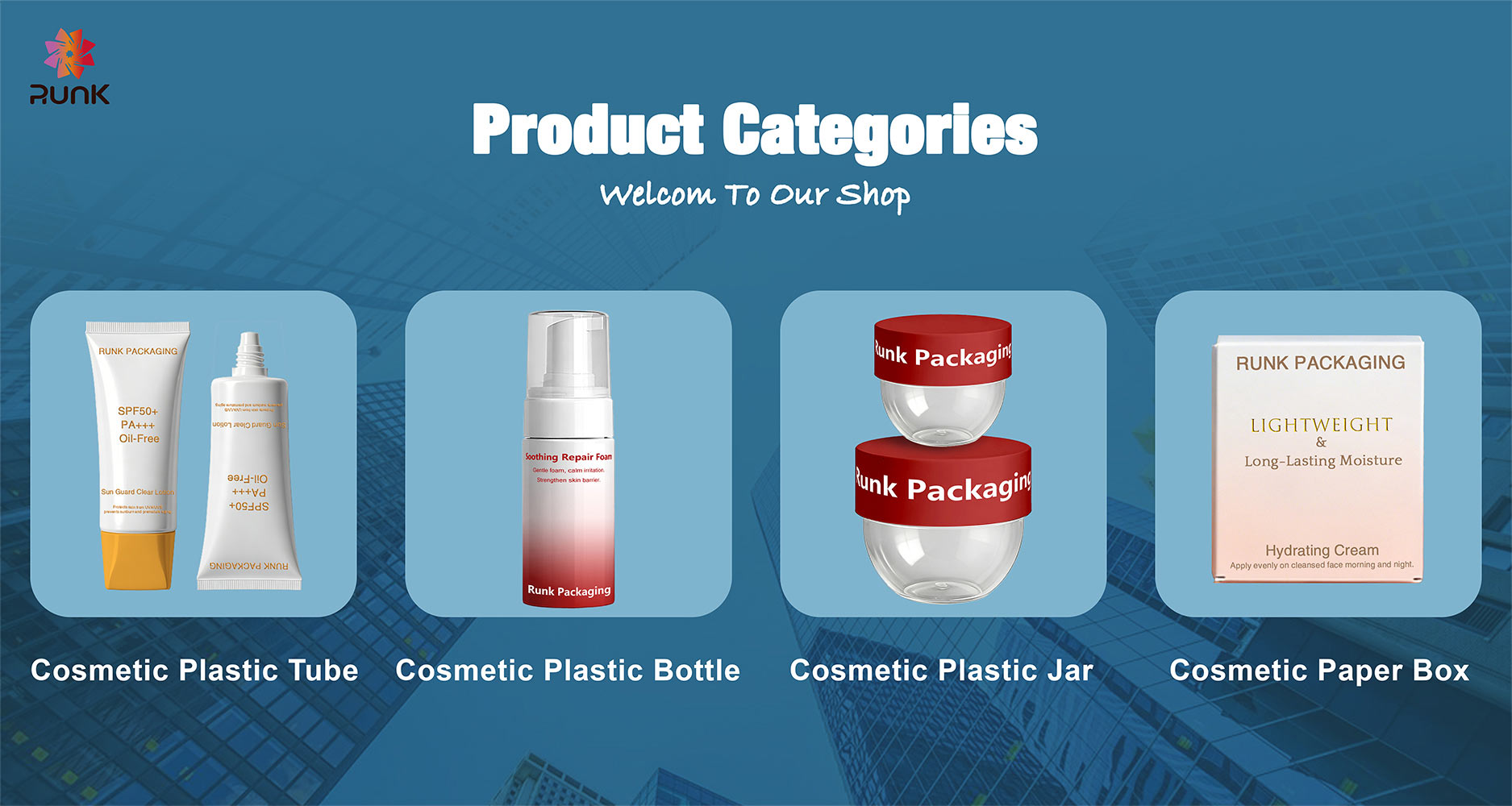
Table of Contents
- Lotion Pump Bottles for Skincare Brands: A Complete Guide
- Introduction: Why Lotion Pump Bottles Matter for Skincare Brands
- 1. What Are Lotion Pump Bottles?
- 2. Different Types of Lotion Pump Bottles for Skincare Products
- 3. Common Materials Used for Lotion Pump Bottles
- 4. How to Choose the Right Capacity for Lotion Pump Bottles
- 5. Customization Options for Lotion Pump Bottles
- 6. How to Select the Right Lotion Pump for Your Formulation
- 7. Sustainable Lotion Pump Bottle Packaging Trends
- 8. What Should Skincare Brands Consider When Buying Wholesale Lotion Pump Bottles?
- 9. Why Choose Runk for Customized Lotion Pump Bottles?
-
10. Frequently Asked Questions About Lotion Pump Bottles
- Q1: What products can be packaged in lotion pump bottles?
- Q2: What materials are commonly used for cosmetic lotion pump bottles?
- Q3: What is the difference between a lotion pump bottle and an airless pump bottle?
- Q4: Can lotion pump bottles be customized with our brand logo?
- Q5: What capacities are available for lotion pump bottles?
- Q6: How do I prevent lotion pump bottles from leaking during transportation?
- Q7: Can lotion pump bottles be used for thick creams?
- Q8: Are plastic lotion pump bottles recyclable?
- Q9: Can I order customized colors for lotion pump bottles?
- Q10: What is the MOQ for customized lotion pump bottles?
- Q11: Can I request samples before placing a bulk order?
- Q12: How long does it take to produce customized lotion pump bottles?
- Q13: What information should I provide when requesting a quotation?
- Q14: Can lotion pump bottles be used for sunscreen products?
- Q15: How can I choose a reliable lotion pump bottle manufacturer in China?