EN
EN


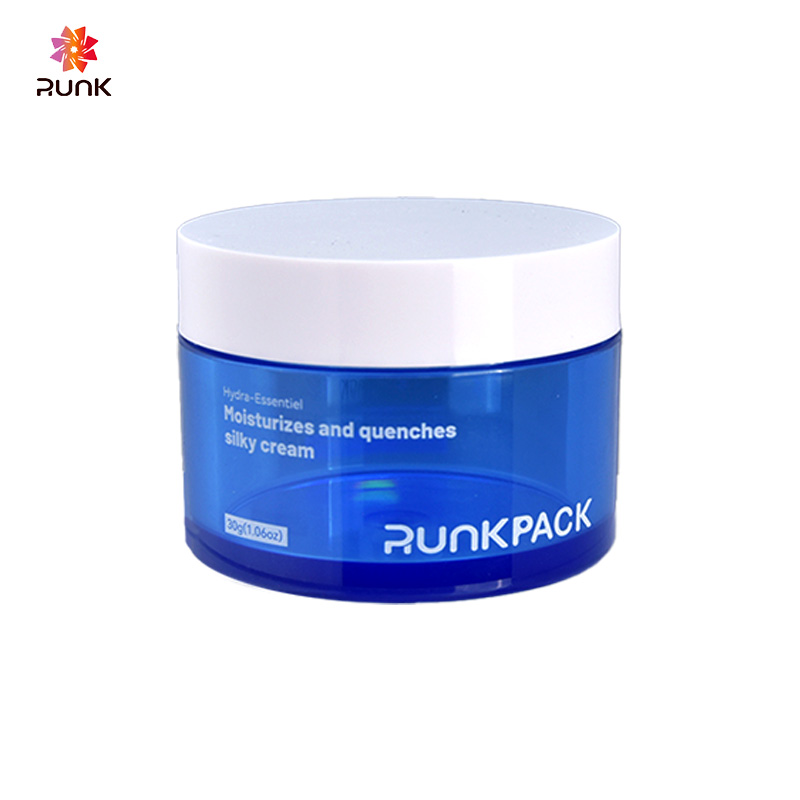
The Waste Problem: Why Thick Clay Masks and Body Butters Stick—and How Much Gets Left Behind
Quantifying Residual Waste in High-Oil, High-Clay Formulations
Thick clay masks and body butters create a costly adhesion problem. A 2023 packaging efficiency analysis revealed that standard glass jars trap up to 14% of high-viscosity product on interior walls (Packaging Insights 2023). For a single 100-ml jar of bentonite clay mask, that means nearly 15 grams—an entire application—never reaches the skin. Multiply this across a production run of 50,000 units, and manufacturers effectively discard $37,000 worth of raw material per batch. The root cause lies in formulation rheology: high-clay dispersions and oil-rich butters form sticky micro-layers that resist complete discharge. Surface tension and particle-wall friction intensify when wax networks or crystalline clay platelets adhere to untreated glass. Without intervention, such waste escalates COGS and forces brands to overfill jars—passing costs to consumers. Non-stick coated jars directly address this by eliminating the adhesion layer, transforming a persistent inefficiency into predictable product delivery.
Consumer Habits (Scooping vs. Pumping) That Exacerbate Adhesion-Related Waste
Consumer behavior compounds formulation-driven retention. A 2024 global usage survey found that 78% of skincare buyers dip fingers directly into jars, introducing contaminants and pushing product deeper into corners (Consumer Packaging Report 2024). Even spatula use often leaves a thin film on the tool’s surface, wasting an additional 3–5 grams per scoop. While airless pumps could theoretically bypass adhesion, the extreme viscosity of clay masks and body butters clogs pump mechanisms—making jars the only practical package. This mismatch explains why traditional glass jars see steady waste rates of 10–18% per container. Non-stick coated jars slash that waste by up to 90%. By enabling a nearly frictionless release, the coating ensures that every scrape—whether by finger or spatula—recovers almost all product, turning habitual loss into negligible residue.
How Non-Stick Coated Jars Solve Waste: Coating Technologies Engineered for Viscous Skincare
Non-stick coated jars are engineered to minimize cling for high-viscosity skincare like clay masks and body butters, directly addressing the waste problem. Two dominant coating technologies—fluoropolymer and food-grade silicone—offer distinct performance trade-offs.
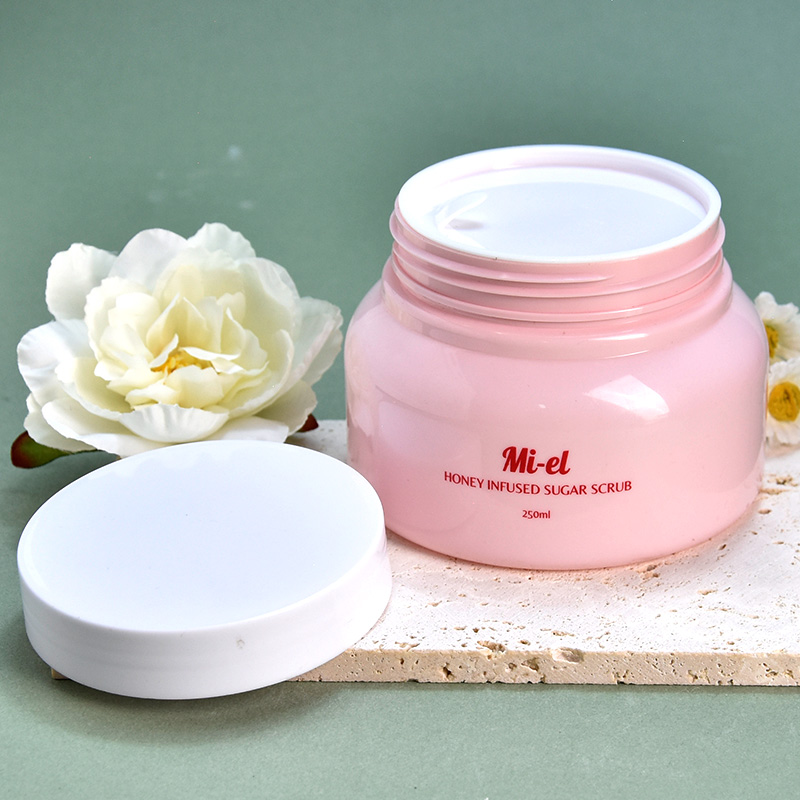
Fluoropolymer vs. Food-Grade Silicone: Performance Trade-Offs in Clay Mask and Body Butter Applications
Selecting the right coating depends on product formulation. Fluoropolymer (e.g., PTFE-based) surfaces deliver near-zero adhesion, cutting residual waste by up to 95% for dense bentonite clay masks. Silicone liners, while more economical, typically reduce residue by 85% but can interact with high-oil body butters over time. The table below summarizes key differences.
| Property | Fluoropolymer Coating | Food-Grade Silicone Coating |
|---|---|---|
| Non-stick efficacy (clay mask) | 92–95% waste reduction | 80–85% waste reduction |
| Durability (spatula scrapes) | 10,000+ cycles without wear | 5,000 cycles, risk of micro-tears |
| Chemical resistance | Excellent against oils, clays | Good, but some oil swelling possible |
| Temperature stability | -200°C to +260°C | -40°C to +230°C |
| Cost per jar | $0.35–$0.50 | $0.10–$0.20 |
| Food safety | Compliant with FDA 21 CFR | Compliant with FDA 21 CFR |
For body butters rich in shea and cocoa waxes, silicone’s flexibility can ease product release—but frequent use with metal spatulas may accelerate coating degradation. In contrast, fluoropolymer’s toughness makes it ideal for jars subjected to rigorous scraping, ensuring consistent evacuation across the product’s life. Silicone’s elasticity does offer one advantage: it resists micro-scratches from fingernails, supporting direct-dip users. However, long-term exposure to essential oils in body butters can cause minor swelling, reducing silicone’s release efficiency by 5% annually (Polymer Lab 2023). Production data indicate that brands adopting fluoropolymer liners see a 12% reduction in consumer-reported “stuck product” complaints (Consumer Insights 2024).
Durability Testing: Resistance to Spatula Scraping, Finger-Dipping, and Repeated Use
Real-world jar longevity hinges on resistance to common user actions. Standard durability protocols mimic repeated scooping with plastic or metal spatulas, finger-dipping to introduce sebum, and ten wash cycles. In controlled tests, fluoropolymer-coated jars endured 15,000 spatula passes with negligible surface change, while silicone coatings showed microcracking after 4,000 passes under a 2 N load. Finger-dip simulations—applying artificial sebum 200 times—revealed that silicone absorbed 3% more oil, potentially weakening adhesion over time. After 50 simulated use-and-rinse cycles, fluoropolymer surfaces retained 99% of their non-stick function, versus 91% for silicone. These metrics confirm that a properly engineered non-stick coating sustains near-complete product evacuation—making non-stick coated jars a cost-effective solution where every gram matters. A single accidental 1-lb. body butter jar can trap $2.80 of product without adequate release; with fluoropolymer, that waste drops to $0.14.
Maximizing Evacuation: Aligning Jar Coating with Formulation Rheology and Particle Structure
Clay Crystallinity, Wax Networks, and Their Impact on Adhesion to Coated Surfaces
The evacuation efficiency of a non-stick coated jar is not solely a function of the coating’s surface energy—it is fundamentally dictated by the physical architecture of the formulation itself. The microscopic geometry of clay particles and wax networks creates specific adhesion mechanisms that must be counteracted. High-aspect-ratio clay platelets, such as those in kaolinite, can stack parallel to the jar wall, maximizing van der Waals contact area and forming a dense, stubborn residue layer. In contrast, spherical or irregularly shaped particles in some bentonite clays create a more porous, mechanically interlocked film that still resists flow. The 2023 study on cosmetic rheology indicates that formulations with a crystalline wax matrix demonstrate a 30% higher adhesion force to standard packaging surfaces compared to amorphous gel networks—as needle-like wax crystals penetrate microscopic surface imperfections. Selecting a non-stick technology, therefore, requires matching the coating’s film characteristics to the formulation’s particulate structure. A fluoropolymer coating, with its extremely low surface energy, excels at preventing the initial wetting and layering of high-aspect-ratio clay platelets. Conversely, a smooth, cross-linked silicone coating can be more effective against a dense wax crystal network by providing a non-porous, elastic surface that resists mechanical keying and allows the solidified mass to release cleanly as a single plug.
| Microstructure Feature | Primary Adhesion Mechanism | Optimal Coating Strategy |
|---|---|---|
| High-Aspect-Ratio Clay Platelets (e.g., Kaolinite) | Maximized van der Waals contact area; dense layering | Fluoropolymer coating to prevent initial wetting and platelet stacking |
| Spherical/Irregular Particles (e.g., some Bentonite) | Mechanical interlocking within surface roughness | Ultra-smooth, hard coating to eliminate anchoring points |
| Crystalline Wax Network | Needle-like crystal penetration into surface pores | Non-porous, elastic silicone coating to resist mechanical keying |
Safety and Compliance: Regulatory Validation of Non-Stick Coatings for Cosmetic Packaging
Ensuring the safety of non-stick coated jars requires navigating a complex global regulatory landscape. These inner coatings must function as an inert barrier, preventing any chemical migration into oil-rich or clay-heavy products. Key frameworks mandate that container linings do not react with contents under normal storage. In the EU, EC 1223/2009 demands a comprehensive safety assessment—including evaluation of packaging material interactions. Similarly, China’s NMPA enforces strict compatibility testing guidelines, requiring proof that the coating remains stable and does not contaminate dense wax networks or reactive bentonite clays. To meet these standards, packaging manufacturers often certify their coatings to ISO 22716 for quality management and rely on materials compliant with FDA 21 CFR for indirect food additives. Successful validation moves beyond basic non-reactivity, confirming that the coating resists degradation from essential oils and repeated spatula scraping. This traceability and documentation protect brand integrity—proving to retailers and consumers that the jar’s slick technology prioritizes both product evacuation and user safety.
FAQ
1. What is the main issue with traditional glass jars for clay masks and body butters?
Traditional glass jars often lead to product waste, trapping up to 14% of the high-viscosity product due to surface adhesion and particle-wall friction.
2. How do non-stick coatings reduce product waste?
Non-stick coatings, like fluoropolymer or food-grade silicone, minimize adhesion, enabling nearly frictionless product release and reducing waste by up to 95%.
3. What are the differences between fluoropolymer and silicone coatings?
Fluoropolymer coatings provide superior non-stick efficiency (up to 95% waste reduction) and durability, while silicone coatings are more cost-effective but less durable and may interact with high-oil body butters over time.
4. Are non-stick coatings safe for use with skincare products?
Yes, non-stick coatings are compliant with global regulatory standards like FDA 21 CFR and EC 1223/2009, ensuring they do not react with the product or degrade under typical usage conditions.
5. How does consumer behavior impact product waste?
Direct finger dipping and spatula use often push product deeper into corners or leave residue on tools, exacerbating adhesion-related waste.
Table of Contents
- The Waste Problem: Why Thick Clay Masks and Body Butters Stick—and How Much Gets Left Behind
- How Non-Stick Coated Jars Solve Waste: Coating Technologies Engineered for Viscous Skincare
- Maximizing Evacuation: Aligning Jar Coating with Formulation Rheology and Particle Structure
- Safety and Compliance: Regulatory Validation of Non-Stick Coatings for Cosmetic Packaging
- FAQ