EN
EN


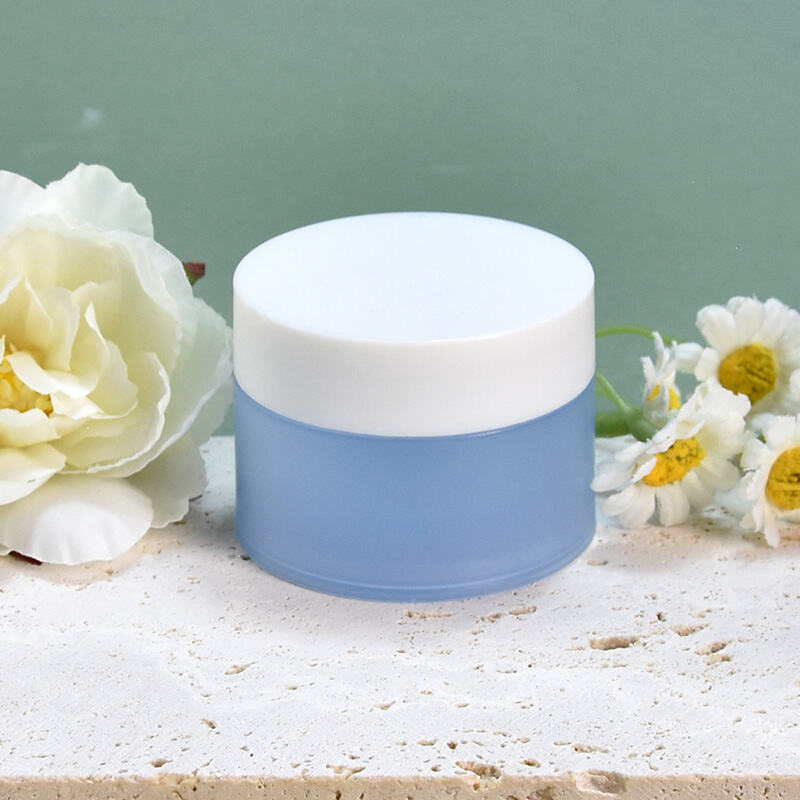
Structural Durability: Engineering Heavy-Duty Reinforced Thread Jars
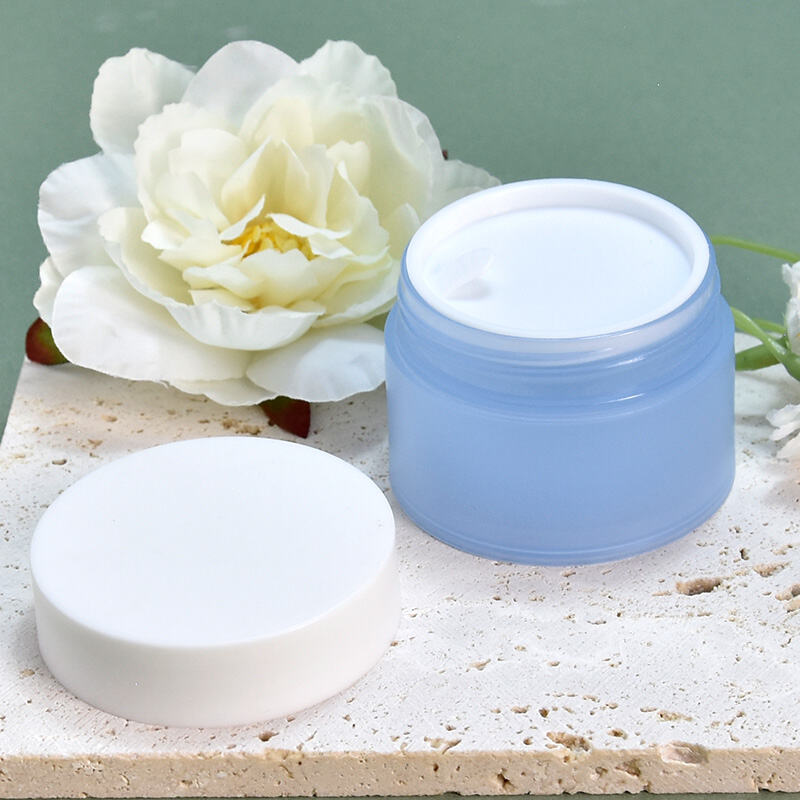
Heavy-Wall PET vs. Glass: Load-Bearing Performance and Impact Resistance
Heavy-wall Polyethylene Terephthalate (PET) jars deliver superior structural durability compared to traditional glass alternatives. PET’s inherent flexibility allows it to absorb impact forces without shattering—impact resistance tests show it withstands drops from heights up to five times greater than glass (Packaging Digest, 2023). This resilience directly enhances load-bearing capacity under vertical stacking pressures common in warehousing and retail distribution. While glass offers rigidity, its brittleness increases fracture risk during transit or accidental impacts. PET’s molecular structure maintains dimensional stability across a broad temperature range (–40°C to 70°C), making it ideal for large-capacity body cream containment where thermal consistency is critical.
| Material Property | Heavy-Wall PET | Glass |
|---|---|---|
| Impact Resistance | High (5× glass) | Low |
| Temperature Tolerance | –40°C to 70°C | Limited by thermal shock |
| Weight Efficiency | ~50% lighter than glass | Heavier |
| Load Distribution | Even stress dispersion | Stress concentration points |
Torque Testing & Neck Finish Standards (70/450, 86/460, 89/400) for Reliable Sealing Integrity
Standardized neck finishes—such as 70/450, 86/460, and 89/400—are engineered to ensure consistent, leak-proof sealing when paired with torque-controlled capping. For example, the 70/450 finish requires a minimum application torque of 7 in-lb to compress liners uniformly against the sealing surface. Jars meeting the more robust 86/460 specification maintain seal integrity under sustained internal pressure up to 30 psi—well above typical vibration-induced stresses encountered during transport. When combined with LDPE foam liners and validated through thermal cycling (–20°C to 50°C), these reinforced threads prevent seal failure caused by expansion and contraction. ISTA 3A-certified testing confirms that torque-controlled capping on standardized finishes delivers 98% seal retention across high-volume production runs.
Large-Capacity Design Optimization for Body Creams (100g–200g / 16 oz–475 ml)
Viscosity-Guided Fill Height and Center-of-Gravity Stability
For high-viscosity body creams (≥100,000 cP), fill height is a decisive factor in both functional stability and structural performance. Filling beyond 90% of total volume raises the center of gravity, increasing tipping risk during use, transport, or shelf handling. To preserve stability—and protect sealing integrity—manufacturers typically limit fill levels to 80–85% of capacity, anchoring the center of gravity within the lower third of the jar. This approach ensures reliable shelf and countertop performance while minimizing stress on the neck finish during repeated opening and closing. In the largest format (475 ml), a fill volume of 380–400 ml strikes the optimal balance: maximizing usable product, enabling easy access, and preserving structural durability under full load.
Height-to-Diameter Ratio Effects on Scoop Access, Shelf Stability, and Stackability
The height-to-diameter ratio governs three key user and operational factors: scoop accessibility, shelf stability, and pallet-stack efficiency. A low ratio (<0.8) yields wide, squat jars with excellent hand access but higher footprint and reduced visual prominence. A high ratio (>1.2) improves shelf density but elevates the center of gravity and demands deeper scooping—challenging for thick creams. For the 475 ml reinforced thread jar, the optimal range is 0.9–1.1. A standard configuration of 89 mm diameter × 100 mm height (ratio = 1.12) delivers stable stacking, minimal tipping risk, ergonomic access, and efficient retail facings—ensuring large-capacity jars remain durable, functional, and consumer-friendly at full fill.
Leak-Proof & Contamination-Resistant Sealing Systems
A secure, contamination-resistant seal is non-negotiable for large-capacity body cream jars, where compromised integrity threatens shelf life, safety, and brand reputation.
Reinforced Threads Paired with LDPE Foam Liners: Dual-Layer Seal Performance Under Thermal Cycling
LDPE foam liners work synergistically with reinforced PET threads to form a dynamic, adaptive seal. The liner’s elasticity allows it to compress uniformly against minor surface variations in the jar’s finish, maintaining continuous contact even during thermal cycling—common during cross-climate shipping and storage. Meanwhile, the robust thread profile prevents liner extrusion under compression or torque, ensuring long-term seal reliability. This dual-layer system has proven effective across viscosity ranges and capacities up to 475 ml, delivering consistent protection against leakage and microbial ingress without requiring over-torquing or secondary seals.
Professional Filling & Dispensing Integration for Premium Body Creams
Integrating high-precision filling equipment into the production line is essential for maintaining both product integrity and process efficiency. High-viscosity body creams demand positive displacement piston fillers to achieve repeatable shot accuracy and eliminate overfilling—critical when working with large-capacity jars where small volumetric variances translate into significant material waste or quality risk. Precise nozzle-to-neck alignment is mandatory to avoid cross-threading the heavy-duty finish, which would compromise seal integrity before capping even begins. Automated lines that combine immediate post-fill capping significantly reduce air exposure and particulate contamination—particularly vital for preservative-light or anhydrous formulations. When properly calibrated and maintained, these integrated systems support high-speed throughput without sacrificing the precision or hygiene expected of premium body care products.
FAQ
Q: What makes heavy-wall PET more durable than glass?
A: Heavy-wall PET is more durable due to its flexibility and impact resistance, allowing it to absorb and distribute forces without shattering, whereas glass is more brittle and prone to fracture.
Q: What are the advantages of torque testing for jar sealing?
A: Torque testing ensures consistent, leak-proof seals by compressing liners uniformly against the jar's finish, enhancing sealing reliability even under transport-induced stresses.
Q: Why is fill height important for large-capacity jars?
A: Filling beyond 90% of capacity raises the center of gravity, increasing tipping risk. Limiting fill to 80–85% stabilizes the jar for safe handling and transport.
Q: How does the height-to-diameter ratio affect functionality?
A: The ratio impacts stability, access, and stacking efficiency. An optimal range (e.g., 0.9–1.1) balances these factors for user-friendly and durable jar designs.
Q: How does the dual-layer sealing system work?
A: LDPE foam liners compress against surface variations, while reinforced threads prevent extrusion, ensuring consistent seals even during thermal cycling.