EN
EN


Why Light and Oxygen Rapidly Degrade Retinol and Vitamin C
Photochemical Oxidation of Vitamin C Under UV and Visible Light
Vitamin C (L-ascorbic acid) is highly susceptible to photochemical oxidation when exposed to UV and visible light—even from indoor lighting. Photons excite electrons in the molecule, generating reactive intermediates that rapidly bind with atmospheric oxygen. This cascade converts active L-ascorbic acid into dehydroascorbic acid, an oxidized form devoid of antioxidant activity or collagen-stimulating capacity. Warm environments accelerate this decay, and unprotected serums can lose most brightening benefits within two weeks under typical bathroom conditions. Critically, the degradation process itself produces free radicals—undermining vitamin C’s protective role and posing a dual risk to skin health. Light-blocking packaging is therefore non-negotiable for preserving efficacy.
Retinol Isomerization and Decomposition Triggered by Light-Air Synergy
Retinol degrades through a damaging synergy of light and oxygen: UV radiation drives photoisomerization—rearranging its molecular structure into unstable, inactive forms like 4,6-diene retinol—while oxygen initiates oxidative chain reactions that yield inert or irritating byproducts such as anhydroretinol. When both stressors coexist, degradation accelerates dramatically—occurring twice as fast as under either factor alone. Heat compounds the damage: above 25°C, decomposition rates double. Within four weeks, unprotected formulas lose over 50% of their retinol potency, diminishing wrinkle-reduction outcomes while increasing risks of irritation and redness. These mechanisms underscore why packaging must simultaneously block light and exclude oxygen to maintain clinical-grade stability.
How Opaque Airless Bottles Deliver Dual-Barrier Protection
Opaque airless bottles provide a scientifically grounded dual defense for light- and oxygen-sensitive actives: complete light blocking and near-zero oxygen ingress.
Light Blocking: Performance of Opaque Materials (Aluminum, Matte-Black PP, UV-Coated Glass)
Three opaque materials deliver robust photoprotection without compromising usability. Aluminum offers total opacity—acting as a full-spectrum light barrier ideal for high-potency retinol and vitamin C formulations. Matte-black polypropylene (PP) absorbs 99% of visible and UV radiation, reducing transmitted light to negligible levels. UV-coated glass—though visually transparent—functions as a fully protective container thanks to a specialized coating that filters out 99% of harmful wavelengths. All three materials ensure shelf-stable potency without relying on consumer behavior (e.g., storing in dark cabinets), making them essential for maintaining ingredient integrity from manufacturing through final use.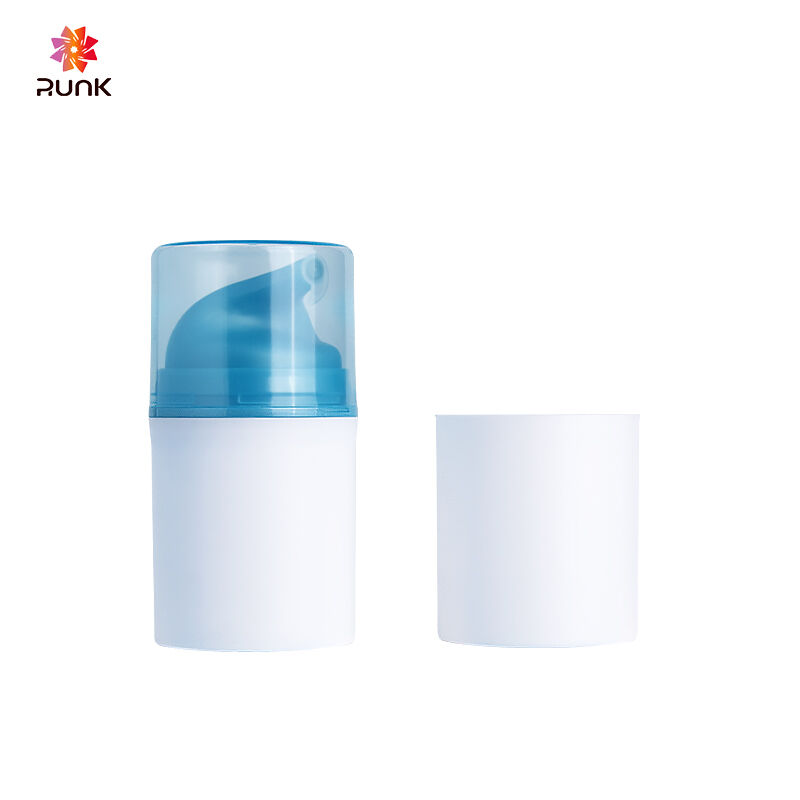
Oxygen Exclusion: Airless Pump Mechanics Preventing Head-Space Degradation and Microbial Contamination
Airless pumps eliminate headspace—the primary site of oxygen accumulation and microbial proliferation—through a sealed, vacuum-driven dispensing system. As product is dispensed, a rising piston or collapsible inner bag maintains constant contact with the formula, preventing air from re-entering the container. Unlike dropper or screw-cap bottles—which draw in fresh oxygen with every use—airless systems preserve a consistently low-oxygen environment from first pump to last. This not only minimizes oxidative degradation but also reduces contamination risk via no-touch, closed-system delivery—a critical advantage for preservative-light or anhydrous antiaging formulations.
Proven Stability: Opaque Airless Bottles vs. Conventional Packaging for Light-Sensitive Actives
HPLC Data: 92% Retinol Retention at 12 Weeks vs. 41% in Amber Dropper Bottles
Independent HPLC analysis confirms the superiority of opaque airless packaging: retinol retention remains at 92% after 12 weeks—more than double the 41% retained in amber dropper bottles. This stark difference reflects the cumulative failure of conventional packaging: amber glass only partially blocks UV light, while repeated air intake during use enables progressive oxidation. In contrast, opaque airless systems combine full-spectrum light exclusion with continuous oxygen suppression—halting both primary degradation pathways at their source.
Real-World Efficacy Correlation: Clinical Outcomes Linked to Packaging-Driven Active Integrity
Stability isn’t theoretical—it directly dictates clinical results. In a 12-week dermatology trial, patients using retinol serums in opaque airless bottles demonstrated 37% greater improvement in wrinkle depth compared to those using identical formulas in conventional amber droppers (Dermatology Times, 2023). This outcome stems from preserved molecular integrity: only intact retinol binds effectively to nuclear receptors, and only unoxidized L-ascorbic acid stimulates collagen synthesis. Degraded vitamin C instead yields erythrulose—a compound linked to transient skin yellowing and zero bioactivity. The airless mechanism further safeguards purity by eliminating open-container exposure, ensuring consistent safety and performance across the entire usage cycle.
| Stability Factor | Opaque Airless Bottles | Conventional Packaging |
|---|---|---|
| Active Ingredient Retention | 90% at 12 weeks | 30–50% at 12 weeks |
| Oxygen Exposure | Near-zero | Repeated intake |
| Light Protection | Complete blockage | Partial (amber glass) |
| Contamination Risk | Low (airless mechanism) | High (open containers) |
FAQ
Why do retinol and vitamin C degrade when exposed to light and oxygen?
Both retinol and vitamin C are highly sensitive to light and oxygen, which trigger photochemical reactions and oxidative processes that degrade their potency and efficacy.
How do opaque airless bottles protect retinol and vitamin C?
Opaque airless bottles protect by blocking light and minimizing oxygen exposure. These bottles maintain the formulation's integrity by preventing degradation through dual-barrier protection.
Can using opaque airless bottles really improve skin treatment outcomes?
Yes, studies have shown that using opaque airless bottles results in significantly better retention of active ingredients, leading to better clinical treatment outcomes and enhanced skin results.
What materials are used for opaque airless bottles?
Materials like aluminum, matte-black polypropylene (PP), and UV-coated glass are used for creating effectively opaque bottles that protect sensitive ingredients.